
OFWs are called the heart of the Philippine economy because their work abroad keeps millions of Filipino households moving. They pay school fees. They fund medicine. They build houses slowly, one remittance at a time. They send balikbayan boxes, cover emergencies, support siblings, invest in small businesses, and help families survive months when local income is not enough.
But the word heart should be used carefully. OFWs are not a magic solution to the country's labor problems. They are people who carry economic pressure across borders, often at great emotional cost. A serious discussion of OFWs should honor their contribution without romanticizing separation.
If you are looking for practical OFW family guides, read Balikbayan Box Ideas: What to Send to the Philippines and What is Pabaon? Filipino Meaning and Tradition. For leaving-abroad gifts, use Best Despedida Gift Ideas in the Philippines.
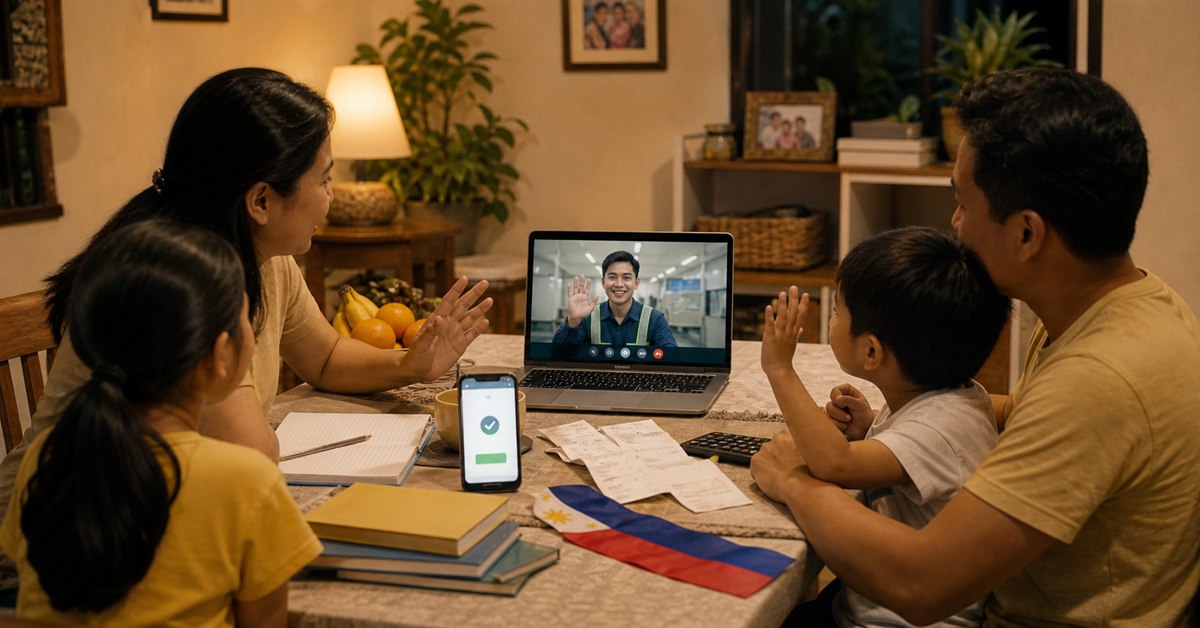
OFW money moves through the economy, but OFW sacrifice starts inside families.
Key facts about OFWs and the Philippine economy
| Question | Latest useful figure |
|---|---|
| How many OFWs are counted in the PSA survey? | About 2.19 million OFWs worked abroad at any time from April to September 2024 |
| How much were 2025 overseas Filipino personal remittances? | About US dollars 39.6 billion |
| How much were 2025 cash remittances through banks? | About US dollars 35.6 billion |
| How much were January-February 2026 personal remittances? | US dollars 6.46 billion, up 3.1% from the same period in 2025 |
| What do remittances support? | Food, rent, tuition, medicine, debt payments, house construction, savings, business capital, emergencies |
| What is the hidden cost? | Family separation, care gaps, homesickness, labor risk, and pressure to keep providing |
Those numbers explain why OFWs matter in macroeconomic terms. But the real story is both national and household-level.
Remittances keep household spending alive
The most visible economic role of OFWs is remittances. The Bangko Sentral ng Pilipinas tracks money sent by overseas Filipinos, including personal remittances and cash remittances coursed through banks. BSP data show personal remittances from overseas Filipinos reached about US dollars 39.6 billion in 2025, while cash remittances through banks reached about US dollars 35.6 billion.
That is not abstract money sitting in a chart. It becomes tuition, rice, rent, antibiotics, electricity bills, internet loads, baptism costs, birthday food, school uniforms, phone repairs, tricycle down payments, and home construction materials.
In January-February 2026, BSP data showed personal remittances at US dollars 6.46 billion, 3.1 percent higher than the same period in 2025. Cash remittances through banks reached US dollars 5.81 billion over the same two-month period. That early-2026 data matters because it shows OFW money is not only a historical pillar; it is still flowing through present-day households.
OFW income supports education
Ask many Filipino professionals who paid for college, board review, or technical training, and one answer comes up again and again: an OFW parent, sibling, aunt, uncle, spouse, or cousin helped.
Education is one of the most powerful ways OFW remittances reshape families. A parent works in Saudi Arabia so a child can finish nursing. A seafarer funds a sibling's engineering degree. A caregiver in Hong Kong pays for nephews' school supplies. A domestic worker in Singapore sends money for a niece's tuition. A construction worker in Qatar pays review-center fees.
This does two economic things at once. First, it keeps children in school when local income might not be enough. Second, it builds human capital: graduates, licensed professionals, skilled workers, and small business owners who may support the next generation.
The social side is more complicated. Many children grow up with one or both parents abroad. Video calls and remittances help, but they do not fully replace daily presence. That is why OFW stories often carry both gratitude and grief.
Remittances stabilize food, rent, health, and emergencies
For many families, remittances are not luxury money. They are a buffer against instability. If a parent gets sick, the OFW is called. If rent is due, the OFW is called. If a typhoon damages a roof, the OFW is called. If a sibling loses a job, the OFW is called. If a child needs a laptop for school, the OFW is called.
This makes OFWs a kind of informal safety net. They cannot replace government support, decent wages, affordable health care, or disaster resilience. But in real Filipino family life, remittances often arrive faster than formal help.
That family safety-net role is why OFW income affects more than the direct recipient. The money moves into sari-sari stores, pharmacies, groceries, schools, transport, construction, online shopping, food delivery, and local services. One remittance can circulate across a whole neighborhood.
OFWs strengthen foreign exchange inflows
At the national level, remittances also matter because they bring foreign currency into the Philippines. Dollars, riyals, dirhams, euros, yen, pounds, won, and other currencies are converted into pesos and used locally.
That inflow helps the country's external accounts and supports domestic consumption. It is one reason economists watch remittance data closely. Strong remittance flows can soften the impact of shocks, especially when exports, tourism, or investment are weak.
But this should not be misunderstood. A country should not depend forever on workers leaving home to stabilize the economy. Remittances are powerful, but they are also evidence of a deeper imbalance: many Filipinos still see better pay, stronger opportunities, or more predictable income abroad than at home.
OFWs support housing and small businesses
OFW money often turns into visible assets: a renovated house, a second floor, a small apartment unit, a sari-sari store, a tricycle, a farm input, a boarding house, a food stall, or a small online business.
These investments matter because they can transform remittances from monthly consumption into long-term security. A family that builds a rental room can earn income even when the OFW contract ends. A small store can support a parent at home. A repaired house can protect a family from floods and heat.
Still, not every OFW household becomes financially secure. Remittances can be eaten up by debt, emergencies, tuition, daily expenses, relatives' requests, and failed investments. That is why financial planning is crucial. The worker needs protection too, not only the family receiving money.
OFWs connect the Philippines to the world
OFWs are not only senders of money. They are also carriers of skill, language, experience, and networks. Nurses learn hospital systems abroad. Seafarers work inside global shipping. Engineers, teachers, hotel staff, domestic workers, caregivers, technicians, and construction workers learn how other workplaces function.
Some come home with savings and skills. Some start businesses. Some support relatives' migration. Some become bridges between Philippine communities and overseas opportunities.
This global connection is a real asset. But again, the benefit is uneven. Skilled professionals may gain career mobility. Domestic workers may face isolation or abuse. Seafarers may spend months away from family. Caregivers may care for other families while missing their own. A serious OFW discussion must hold all of that at once.
Why "modern heroes" can be both true and incomplete
OFWs are often called bagong bayani, or modern heroes. The phrase reflects something real: the sacrifice of leaving home, the discipline of remitting, the courage to work in unfamiliar places, and the national contribution of their income.
But hero language has a risk. It can make suffering sound noble enough to tolerate. It can pressure workers to keep sending money even when they are tired, underpaid, sick, or lonely. It can make families forget that the OFW also needs rest, savings, insurance, and a life beyond obligation.
Calling OFWs heroes should come with responsibility: protect them from illegal recruiters, abusive employers, contract substitution, unpaid wages, debt traps, unsafe housing, discrimination, and weak reintegration support. Honor should not stop at slogans.
The family cost of an OFW economy
The Philippine economy benefits from remittances, but families pay emotional costs. Children may grow up measuring love through boxes, bank transfers, and video calls. Spouses may parent alone. Elderly parents may wait years for homecomings. Workers may miss birthdays, graduations, hospital visits, funerals, and everyday meals.
This is why the OFW story is not just economic. It is also cultural and emotional. The balikbayan box is love in cardboard. The remittance receipt is both support and absence. The video call is connection and reminder. The airport departure is pride and heartbreak.
When people say OFWs are the heart of the economy, this is the part that should not be erased. The heart pumps money, but it also aches.
What OFW families can do with remittances wisely
Remittance planning is not always easy, especially when the family has urgent needs. But a few habits can protect both the worker and the household:
- Agree on a realistic monthly support amount instead of unlimited emergency requests.
- Separate money for food, school, medicine, debt, savings, and investment.
- Keep a small emergency fund in the Philippines and abroad.
- Avoid using the OFW's entire income for consumption.
- Build records of remittances, expenses, and loans.
- Discuss when the OFW wants to come home and what income will replace the contract.
- Protect the worker's own health, rest, legal documents, and savings.
This conversation can be difficult because many families treat OFW income as family income. But if the worker burns out or returns home with no savings, the whole family becomes vulnerable.
What the country owes OFWs
OFWs do not only need praise. They need systems.
They need honest recruitment, clear contracts, affordable documentation, fast legal help, mental health support, fair remittance costs, insurance awareness, reintegration programs, and real domestic job creation. They need government services that are easier to access from abroad. They need families and communities to treat them as people, not only providers.
The ultimate goal should not be to keep exporting workers forever. The goal should be choice: Filipinos can work abroad if they want to, not because local opportunity leaves them no other path.
Sources and data notes
- Bangko Sentral ng Pilipinas OFW remittance statistics provide monthly and annual remittance data, including 2025 totals and January-February 2026 figures.
- PSA 2024 Survey on Overseas Filipinos estimates the number of OFWs and reports remittance behavior for April to September 2024.
- Department of Migrant Workers is the main Philippine government agency for migrant worker protection, services, and policy.
- Commission on Filipinos Overseas provides broader migration and overseas Filipino context beyond temporary OFW work.
FAQs
Why are OFWs important to the Philippine economy?
OFWs matter because their remittances support household spending, education, health care, housing, small businesses, savings, and foreign exchange inflows. Their work also connects Filipino families to global labor markets.
How much money do OFWs send to the Philippines?
BSP data show overseas Filipino personal remittances reached about US dollars 39.6 billion in 2025, while cash remittances coursed through banks reached about US dollars 35.6 billion. In January-February 2026, personal remittances reached US dollars 6.46 billion.
How many OFWs are there?
The PSA 2024 Survey on Overseas Filipinos estimated about 2.19 million OFWs who worked abroad at any time from April to September 2024.
Are OFWs called heroes?
OFWs are often called modern heroes because of their sacrifice and contribution to families and the economy. But the label should not hide the need for safer migration, better protection, and more decent jobs at home.
What are the social costs of OFW work?
Common costs include family separation, loneliness, parenting across distance, exploitation risk, debt, difficult working conditions, delayed homecoming, and pressure to keep sending money even when the worker is struggling.
Final thought
OFWs are the heart of the Philippine economy because their labor beats through everyday Filipino life: tuition paid, medicine bought, houses repaired, siblings supported, businesses started, and families kept afloat.
But a heart should not be overworked until it fails. The best way to honor OFWs is not only to thank them. It is to protect them, plan with them, stop taking their sacrifice for granted, and build a Philippines where working abroad is a choice, not the only way to breathe.
Deeper buying and planning guide
Why OFWs Are the Heart of the Philippine Economy needs to balance tradition with real-life variation. Filipino customs are not identical in every province, school, church, office, or family, so a useful guide explains the common meaning while still leaving room for local practice.
The primary keyword focus is Why OFWs Are the Heart of the Philippine Economy, but the page should also answer related search intent naturally: who it is for, when it matters, what to check first, what to avoid, and how to adapt the advice in the Philippines. For AI SEO, the goal is not to repeat the keyword mechanically. The goal is to give clear, extractable answers that can stand alone in a search snippet, AI Overview, or chatbot summary without losing the practical context.
How to make a smart decision
Start with the situation, not the product or idea. A student, a parent, a commuter, a remote worker, and a holiday host may all search for Why OFWs Are the Heart of the Philippine Economy, but they do not need the same answer. The best decision comes from matching the recommendation to budget, timing, risk, and the consequence of getting it wrong. If a cheap option fails after one week, it may cost more than a mid-range choice. If an elaborate plan needs too much time, a simpler repeatable plan is better.
Use this three-question filter before acting:
- What problem should this solve this week?
- What detail can change before I buy, travel, cook, attend, or prepare?
- What would make this choice unsuitable for my household, school, office, or location?
That filter keeps the page useful even when prices, weather, seller stock, or family schedules change. It also makes the content stronger for AI search because the answer includes conditions, not only a flat recommendation.
Philippines-specific checklist
| Check | What to do | Why it matters |
|---|---|---|
| Requirement | Write down the real use case before comparing options | Prevents buying for a fantasy version of the week |
| Budget ceiling | Set the maximum total cost including shipping or extras | Keeps the decision realistic |
| Verification | Check seller, date, policy, size, and current availability | Avoids outdated or misleading claims |
| Local adaptation | Adjust for school, office, barangay, family, or transport rules | Philippine routines vary by place |
| After-use review | Keep what worked and remove what did not | Makes the next decision faster |
Fact-check and source notes
For culture and holiday pages, dates and official observances should be checked against government sources, especially when a post mentions a 2026 calendar. Historical context should be separated from family practice because Filipino traditions vary by region, religion, school, workplace, and household. Why OFWs Are the Heart of the Philippine Economy uses that conservative approach: explain the common pattern, note where rules can change, and avoid treating one family's custom as the national standard.
Sources used for this fact-check layer:
- NHCP materials on Philippine independence and nationhood
- Supreme Court E-Library copy of Proclamation No. 1006, s. 2025 for 2026 holidays
- DTI online shopping safety tips
- DTI e-commerce FAQs on seller checks, returns, and complaints
The safest rule is to separate stable guidance from changeable details. Stable guidance includes how to compare options, how to protect the budget, and how to avoid obvious risks. Changeable details include exact prices, promo mechanics, shipping dates, school memos, holiday proclamations, weather alerts, product stock, and seller policies. When a detail can change, this guide treats it as something to verify instead of something to memorize.
SEO and AI-search answer structure
For traditional SEO, Why OFWs Are the Heart of the Philippine Economy should include the main keyword in the title, introduction, headings, and supporting copy without stuffing. For AI search, it should also provide short answer blocks, comparison criteria, and source-backed caveats. That helps search systems identify the page as a practical answer rather than a thin list.
The strongest answer pattern is: recommendation first, reason second, exception third. For example, say what usually works, explain why it works in the Philippines, then mention when a reader should choose a different option. This is clearer than a long paragraph that hides the actual answer.
Existing quick-answer points to preserve:
- Why are OFWs important to the Philippine economy?: OFWs matter because their remittances support household spending, education, health care, housing, small businesses, savings, and foreign exchange inflows. Their work also connects Filipino families to global labor markets.
- How much money do OFWs send to the Philippines?: BSP data show overseas Filipino personal remittances reached about US dollars 39.6 billion in 2025, while cash remittances coursed through banks reached about US dollars 35.6 billion. In January-February 2026, personal remittances reached US dollars 6.46 billion.
- How many OFWs are there?: The PSA 2024 Survey on Overseas Filipinos estimated about 2.19 million OFWs who worked abroad at any time from April to September 2024.
- Are OFWs called heroes?: OFWs are often called modern heroes because of their sacrifice and contribution to families and the economy. But the label should not hide the need for safer migration, better protection, and more decent jobs at home.
Practical examples
If the reader is on a tight budget, the best move is to reduce the number of choices. Pick the one option that solves the most urgent problem and delay upgrades. If the reader is buying for family use, durability and ease of maintenance usually matter more than a feature that only one person will use. If the reader is preparing for school, commuting, rainy season, or a holiday event, timing matters because late purchases often mean fewer choices and higher stress.
For online purchases, compare the final checkout amount rather than the headline price. Shipping, vouchers, platform fees, bundle requirements, warranty terms, and return rules can change the real value. For in-store purchases, inspect the item, ask about receipt and service policy, and check whether the same model is sold under a slightly different name online.
Common weak spots to avoid
Do not rely on one viral recommendation. Do not assume the most expensive option is automatically the best. Do not treat old prices as current. Do not ignore return policies. Do not buy a product or follow a plan only because it looks good in photos. Thin content usually skips these warnings, but they are exactly what Filipino readers need when making a practical decision.
A stronger page also avoids fake certainty. If there is no official price, say prices vary. If a practice differs by region, say it differs. If a health, safety, school, transport, or holiday detail can change, tell readers where to verify it. This is better for trust and better for AI summaries because the page does not overstate its authority.
Short answers for AI search
What is the fastest way to use Why OFWs Are the Heart of the Philippine Economy?
Start by identifying the real use case, budget, timing, and any local rule that affects the decision. Then compare only the options that match those limits.
What should readers fact-check before following Why OFWs Are the Heart of the Philippine Economy?
Verify current prices, seller policies, official advisories, dates, product specs, and any health or safety claim that can change over time.
How does this guide help with AI search results?
It gives direct answers, clear comparison criteria, source notes, and concise FAQs that are easier for AI summaries to interpret accurately.
What is the most common mistake?
The most common mistake is copying a generic recommendation without checking whether it fits the reader's location, budget, schedule, and actual need.
What makes this advice practical in the Philippines?
It accounts for changing prices, weather, transport, school or office rules, and household budgets instead of assuming perfect conditions.
Bottom-line recommendation
Use Why OFWs Are the Heart of the Philippine Economy as a practical starting point, then verify the details that can change before acting. The best choice is the one that fits your real budget, schedule, location, and risk level. If two options look similar, choose the one with clearer terms, better evidence, easier after-sales support, and fewer hidden costs.
A useful editorial check for Why OFWs Are the Heart of the Philippine Economy is whether a reader can act after one pass. If the page only says what is nice, it is still thin. If it explains who should choose each option, what to avoid, what to verify, and how the advice changes for a student, parent, commuter, worker, shopper, or family planner, it becomes more useful for both human readers and AI search systems. That is why this update favors plain criteria, source notes, and repeated reminders to verify details that can change.