
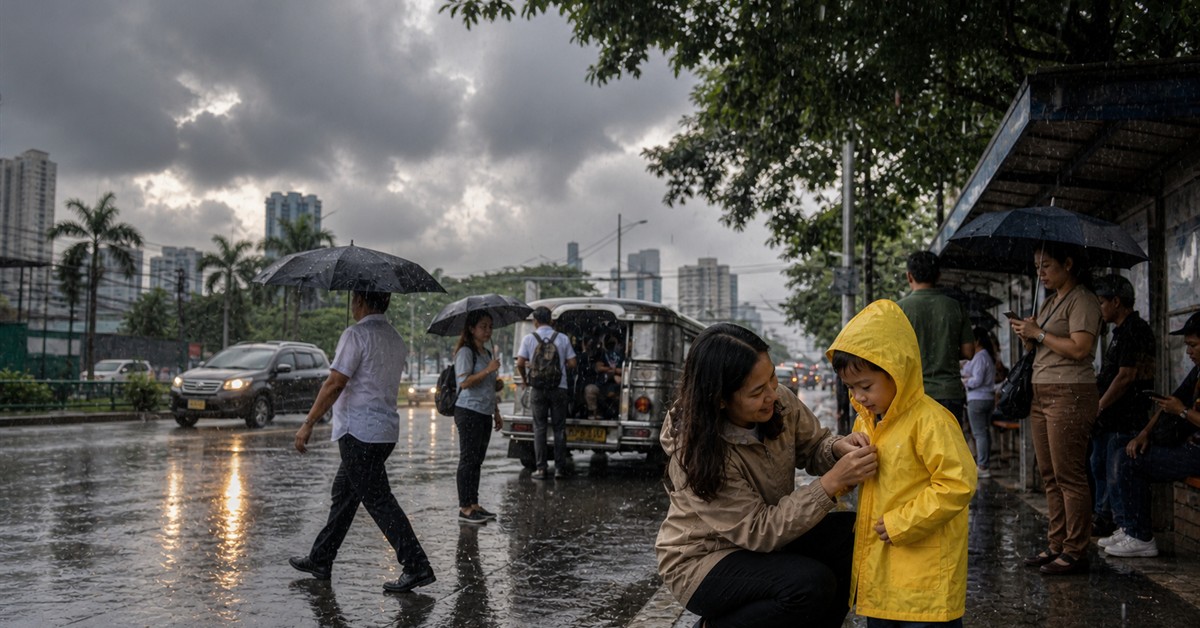
In many parts of the Philippines, rainy season usually starts sometime from late May to June, but it does not begin on the same calendar date every year.
The short answer: rainy season starts when PAGASA observes enough rainfall and wind-pattern changes to declare the official onset of the wet season. That is why one year may feel rainy by late May, while another year may not be officially declared until June.
For 2026, public reports checked on May 29, 2026 said PAGASA expected the wet season to begin in late May or early June. Treat that as a weather-agency expectation, not a permanent calendar rule. Always check the latest PAGASA advisory for the formal declaration.
If you are preparing your home, school bag, commute, or emergency kit, do not wait for the announcement. Start with our rainy season essentials Philippines guide, rainy season prep checklist, best umbrellas for rainy season, and best rain jackets Philippines guide.
Quick answer: when does rainy season start?
| Question | Practical answer |
|---|---|
| Usual start | Late May to June in many western areas |
| Official start | When PAGASA declares onset based on rainfall and wind patterns |
| Same date every year? | No |
| Same across all regions? | No, climate varies by region |
| Same as typhoon season? | No, but they overlap |
| Should you prepare before the declaration? | Yes |
The most practical rule for Filipino households is: prepare by May, expect more rain by June, stay alert through the monsoon and typhoon months.
Why there is no single fixed start date
Rainy season is not like Christmas, Independence Day, or the first day of school. It is a weather pattern. PAGASA does not simply say "rainy season starts every June 1" because real weather does not follow that kind of schedule.
The start depends on conditions such as:
- repeated rainfall over monitored areas
- weakening of dry-season patterns
- strengthening of the southwest monsoon or Habagat
- changes in wind direction
- cloud and rain patterns that indicate the wet season has begun
This is why the first heavy afternoon thunderstorm does not automatically mean rainy season has officially started. A few isolated rains can happen before the season changes. PAGASA looks for a broader and more sustained pattern.
For ordinary people, the difference matters because one rainy week may be followed by hot weather again. The official onset is about the season pattern, not one dramatic downpour.
What PAGASA said for 2026
As of public reports checked on May 29, 2026, PAGASA was expecting the 2026 wet season to start in late May or early June. That matches the usual timing for many parts of the country, especially areas affected by the southwest monsoon.
This does not mean every city, province, island, or barangay suddenly becomes rainy at the same time. It also does not mean rain will be constant every day after the declaration. The wet season can begin with scattered thunderstorms, monsoon rains, humid mornings, sudden afternoon showers, and occasional dry breaks.
The safest wording is:
The 2026 rainy season in the Philippines was expected to start around late May or early June, but the official onset depends on PAGASA's declaration.
If you are reading this after PAGASA has released a newer advisory, follow the newer advisory. Weather is time-sensitive.
Rainy season vs Habagat vs typhoon season
People often use these terms together, but they are different.
Rainy season is the broader wet period when many areas receive more frequent rain.
Habagat, or the southwest monsoon, is a wind system that brings warm, moist air and monsoon rains to parts of the Philippines, especially western sections of Luzon and the Visayas.
Typhoon season refers to the period when tropical cyclones are more common. PAGASA monitors tropical depressions, storms, severe tropical storms, typhoons, and super typhoons when they enter or affect the Philippine Area of Responsibility.
They overlap, but they are not identical. A Habagat-enhanced rain event can flood areas even without a direct typhoon landfall. A tropical cyclone can also affect the country before or after the core monsoon period.
Does rainy season start at the same time everywhere?
No. The Philippines has different climate types because of geography, mountains, coastlines, monsoon exposure, and island position.
PAGASA's climate information describes areas with different rainfall patterns. Some parts of the country have a more pronounced dry and wet season. Other areas have rainfall distributed more evenly through the year, or no very pronounced dry season.
That means "rainy season starts in June" is useful as a general Filipino shortcut, but it is not perfect for every region.
Examples:
- Metro Manila and many western areas often feel the shift around late May to June.
- Western Luzon and western Visayas are strongly affected by Habagat.
- Eastern-facing provinces can receive significant rain from other weather systems even outside the classic Habagat period.
- Mindanao rainfall patterns differ by location and are not always the same as Luzon.
For local decisions, follow the PAGASA forecast for your area, not just national shorthand.
Common signs rainy season is arriving
You may notice rainy season approaching before the formal declaration:
- More afternoon thunderstorms
- Dark clouds building after hot mornings
- Humid air and heavier-feeling heat
- More frequent rain over several days
- Weather reports mentioning Habagat
- Longer wet spells instead of isolated showers
- More warnings about flooding, landslides, and rough seas
Still, these are signs, not official criteria. Let PAGASA make the formal call.
What changes after PAGASA declares onset?
For most households, nothing magical happens on the day of the declaration. You may already have seen rain before it. You may also still get hot, dry breaks after it. The declaration matters because it confirms that the broader seasonal pattern has shifted.
After the official onset, people should treat rainy-season planning as the default:
- Schools and families should expect more wet commutes.
- Offices should expect heavier traffic and transport delays during downpours.
- Barangays should monitor flood-prone streets, canals, and creekside areas.
- Homeowners should check roofs, gutters, and drainage more frequently.
- Motorcycle riders should keep rain suits ready instead of treating rain gear as optional.
- Travelers should add weather buffers to provincial trips, hikes, and flights.
The declaration is also a reminder that hazards can stack. A normal rainy afternoon is inconvenient. A Habagat episode enhanced by a tropical cyclone can produce days of rain. A short but intense thunderstorm can flood low-lying roads even when there is no typhoon signal.
That is why the first step is not panic. It is readiness: working flashlights, charged power banks, rain gear, dry bags, updated emergency numbers, and a habit of checking forecasts before leaving home.
How to read forecasts during the rainy season
During rainy season, avoid reading weather forecasts as a simple yes-or-no question: "Will it rain today?" A better question is: Where, when, how strong, and for how long?
When checking forecasts, look for:
- Thunderstorm advisories for sudden local heavy rain
- Heavy rainfall warnings for flood and landslide risk
- Habagat updates for widespread monsoon rain
- Tropical cyclone bulletins when a low pressure area or storm is being monitored
- Local government advisories for class suspensions, road closures, and evacuation notices
A 40% rain chance can still ruin a commute if the rain falls exactly during dismissal or rush hour. A day with no typhoon can still flood if monsoon rain sits over the same area. A sunny morning can still turn into a dark afternoon thunderstorm.
For Filipino commuters, the practical habit is simple: check before leaving, check before going home, and keep one rain solution in your bag even when the morning looks clear.
How travelers should plan around rainy season
Travelers should treat rainy-season dates as flexible, not forbidden. You can still travel in June, July, August, September, and later months, but you should plan differently.
For city trips, bring an umbrella, packable jacket, waterproof pouch, and shoes that can handle wet pavement. For mountain trips, monitor landslide risk and avoid forcing hikes when rainfall warnings are active. For beach trips, watch sea conditions and ferry advisories, not just hotel weather apps. For flights, leave more buffer time because road flooding and air-traffic delays can build quickly.
If you are visiting the Philippines from abroad, remember that "rainy season" does not mean it rains all day, every day. Many days are partly sunny with heavy rain later. The issue is unpredictability: a short storm can still disrupt transportation, tours, laundry, outdoor photos, and beach plans.
Plan activities with indoor backups. Keep documents and electronics in waterproof pouches. Choose luggage and bags that can survive a wet sidewalk.
When should Filipino households start preparing?
Start preparing before June, especially if your home, commute, or school route is flood-prone.
Do these before the rains become frequent:
- Clean gutters, drains, canals, and roof edges.
- Check leaks around windows, ceilings, and doors.
- Prepare umbrellas, rain jackets, ponchos, and waterproof bag covers.
- Test emergency lights, flashlights, and power banks.
- Keep basic medicine, first aid, and drinking water at home.
- Save local emergency numbers and barangay contacts.
- Check school bags, laptop bags, and documents for water protection.
- Remove standing water where mosquitoes can breed.
Rainy season preparation is not only about typhoons. It is also about daily disruption: wet uniforms, delayed commutes, dengue risk, flooded streets, power interruptions, and damaged gadgets.
What students and commuters should do first
For students, the rainy season often overlaps with the school calendar. Prepare:
- umbrella or raincoat
- waterproof bag cover
- extra socks
- plastic pouch for modules, papers, or gadgets
- small towel
- slippers or backup footwear if appropriate
- phone power bank
For commuters, prioritize:
- sturdy umbrella
- packable rain jacket or poncho
- waterproof pouch for phone and wallet
- shoes that can handle wet pavement
- alternate route if the usual road floods
- enough commute time during heavy-rain days
For motorcycle riders, a normal rain jacket is not enough. Use a proper rain suit with pants, reflective details, and secure closures.
What not to assume
Do not assume the first rain means the rainy season has officially started.
Do not assume a sunny week means rainy season is over.
Do not assume your province follows Metro Manila's pattern.
Do not assume rainy season and typhoon season are the same thing.
Do not wait for a tropical cyclone before cleaning drains, preparing power banks, or checking roof leaks.
Weather transitions are messy. Preparedness should be early and boring.
Source note
This article uses PAGASA climate information for Philippine wet/dry season context and public reporting from May 2026, including GMA News coverage of PAGASA's late-May/early-June wet-season expectation. Weather claims are time-sensitive; check PAGASA for the latest official advisories.
Frequently asked questions
When does rainy season start in the Philippines?
Rainy season usually starts from late May to June in many parts of the Philippines, especially areas affected by the southwest monsoon. The official start is not fixed; PAGASA declares it when rainfall and wind-pattern criteria show the wet season has begun.
Did the 2026 rainy season already start in the Philippines?
As of the latest public reports checked on May 29, 2026, PAGASA expected the 2026 wet season to begin in late May or early June. For the official status, check the latest PAGASA advisory because weather declarations can change after this article is written.
Is rainy season the same as typhoon season?
No. Rainy season is the broader wet period. Typhoon season refers to the period when tropical cyclones are more frequent. They overlap, but a rainy day does not always mean a typhoon, and a typhoon can affect the country outside the usual rainy-season shorthand.
What month has the most rain in the Philippines?
It depends on the region. In many western areas, the wettest months often fall within the southwest monsoon period from roughly June to September, with tropical cyclones adding risk through later months. Local climate patterns vary, so check PAGASA and local forecasts.
What should I prepare before rainy season starts?
Prepare rain gear, waterproof bags, emergency lights, power banks, medicine, drinking water, first-aid supplies, clean drains, roof-leak fixes, and a family communication plan. If you commute or have children in school, prepare bag covers, extra socks, and raincoats before June.
Final answer
Rainy season in the Philippines usually starts in late May or June, but there is no fixed date. PAGASA declares the official onset when rainfall and wind patterns show that the wet season has begun.
For practical planning, prepare by May, expect more rain by June, and keep checking PAGASA when weather systems, Habagat, or tropical cyclones begin affecting your area.