
Every year on June 12, the Philippines marks one of its most significant national occasions — the anniversary of the declaration of independence from Spanish colonial rule. The date is a public holiday, observed with flag ceremonies, commemorations, and national reflection. For students, it arrives in lessons about Emilio Aguinaldo, the Katipunan, and the Philippine Revolution. For adults, it is a recurring reminder of the country's long road to sovereignty.
This article covers the full story: why June 12, what happened on that day in 1898, who made it happen, and how the holiday eventually came to be observed as it is today. For family-friendly plans, school ideas, and quick trivia, read Philippine Independence Day 2026 Activities and Fun Facts. For a day-of reflection guide, read Philippine Independence Day 2026: Celebrating Filipino Pride.
When is Philippine Independence Day?
Philippine Independence Day is celebrated every year on June 12. It is a regular national public holiday, meaning government offices, banks, and schools are closed on this date. The holiday marks the anniversary of the Philippine Declaration of Independence proclaimed on June 12, 1898.
What happened on June 12, 1898?
The setting: Kawit, Cavite
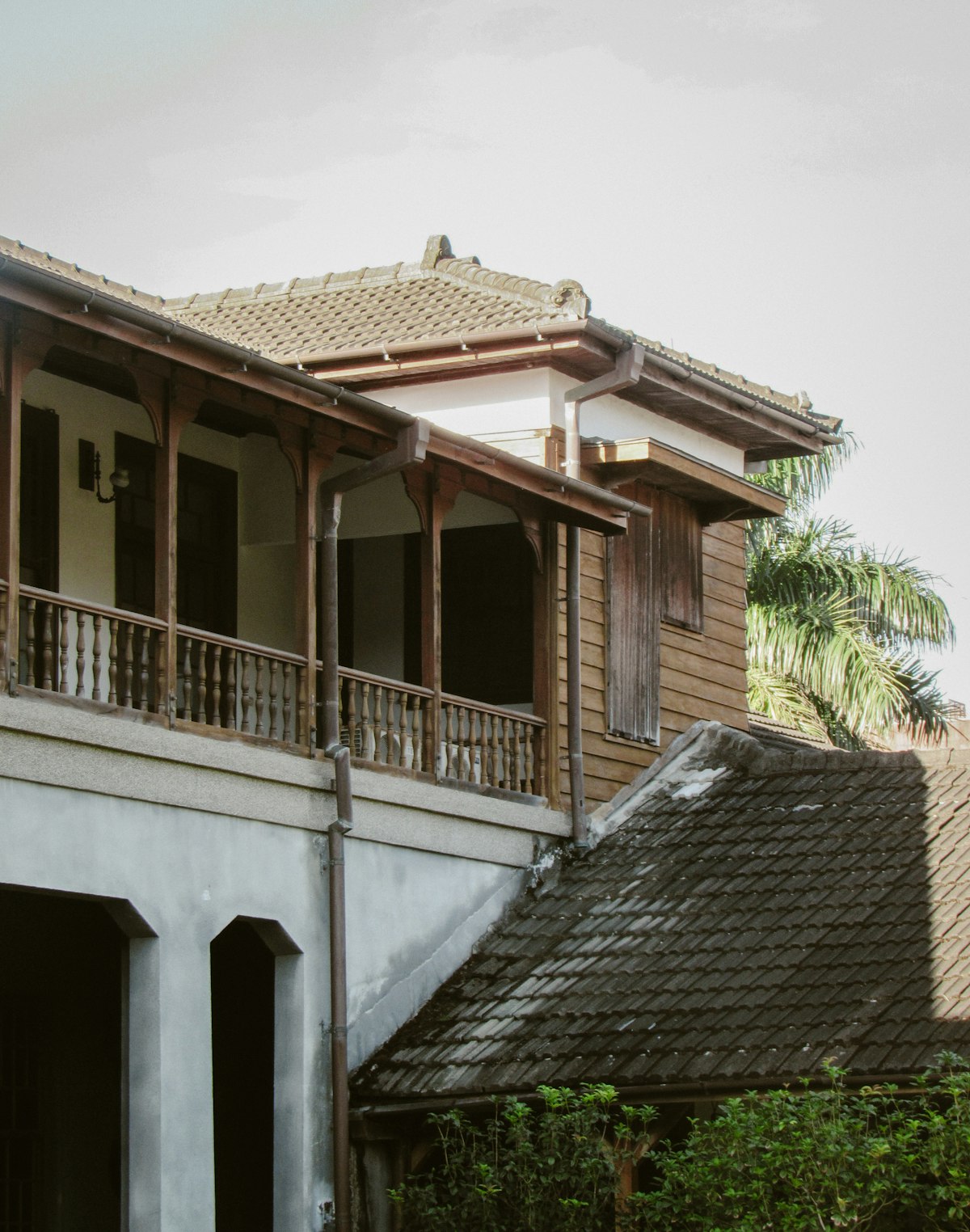
On the afternoon of June 12, 1898, at approximately 4 to 5 o'clock, Filipino revolutionary leader General Emilio Aguinaldo appeared on the balcony of his ancestral home in Kawit, Cavite. Before a crowd of Filipino soldiers, officials, and witnesses — and one American military officer present as an observer — he proclaimed the independence of the Filipino people from over three centuries of Spanish colonial rule.
It was a declaration that had been building for years.
The road to independence: revolution and exile
The Filipino struggle for independence from Spain reached a critical point in 1896, when the Katipunan — a secret revolutionary society founded by Andrés Bonifacio — launched an armed uprising. The revolution spread quickly, drawing fighters across Luzon and, eventually, much of the archipelago.
By 1897, a truce called the Pact of Biak-na-Bato temporarily paused hostilities. Under its terms, Aguinaldo and other revolutionary leaders went into exile in Hong Kong, taking a sum of money from the Spanish authorities.
The Spanish-American War changes everything
In April 1898, the United States declared war on Spain. American naval commodore George Dewey destroyed the Spanish fleet at Manila Bay on May 1, 1898, crippling Spanish military power in the Philippines.
Aguinaldo returned from Hong Kong in May 1898 with American assistance and resumed the revolution. By June, Filipino forces had effectively surrounded Manila and controlled large portions of Luzon. The Spanish colonial government's hold on the Philippines was collapsing.
The declaration itself
On June 12, 1898, Aguinaldo proclaimed independence. The event involved:
- The unfurling of the Philippine flag — sewn in Hong Kong by Marcela Agoncillo, her daughter Lorenza, and Delfina Herbosa de Natividad (a niece of José Rizal). The flag's design — blue and red stripes, white triangle, three stars, and an eight-rayed sun — incorporated symbols of the revolution and the nation's regions.
- The first public performance of the national anthem — then called the Marcha Filipina Magdalo, composed by Julián Felipe and played by the San Francisco de Malabon band. Today it is known as Lupang Hinirang.
- The reading of the declaration — the Acta de la Proclamación de Independencia del Pueblo Filipino, prepared by Ambrosio Rianzares Bautista and read aloud in Spanish.
- The signing of the declaration — by 98 persons, including military officers, local officials, and witnesses.
It was, by any measure, a historic act of national will.
What happened after the declaration?
The Treaty of Paris (December 1898)
The Philippine declaration of independence was not recognized by Spain. The Spanish-American War ended in December 1898 with the Treaty of Paris, under which Spain ceded the Philippines to the United States — without consulting Filipinos — in exchange for $20 million.
The Philippines went from one colonial power to another.
The Philippine-American War (1899-1902)
Filipino forces, under Aguinaldo and the First Philippine Republic (also called the Malolos Republic), refused to accept American authority. The result was the Philippine-American War, which began in February 1899. The war was brutal and costly. Aguinaldo was captured in 1901. The fighting — particularly in its guerrilla phase — continued until 1902 in most areas and later in some regions.
July 4, 1946: formal international independence
After decades as a U.S. territory, the Philippines was formally granted independence by the United States on July 4, 1946. For several decades after independence, the country celebrated its national day on July 4 — the date the Americans had set.
The shift to June 12
In 1962, President Diosdado Macapagal issued a proclamation moving the observance from July 4 to June 12 — the date of Aguinaldo's 1898 declaration. The shift was significant: it asserted that Filipino independence was not a gift from the United States granted in 1946, but an assertion of national sovereignty made by Filipinos themselves in 1898.
The Republic Act 4166 in 1964 codified this change, formally establishing June 12 as Philippine Independence Day. The holiday has been observed on June 12 ever since.
Who is Emilio Aguinaldo?
Emilio Aguinaldo (1869-1964) was the military and political leader who led the Philippine Revolution against Spain and declared independence on June 12, 1898. He became the first President of the Philippines under the Malolos Republic — the first Philippine Republic.
Aguinaldo was just 29 years old when he proclaimed independence. His later role in the Philippine-American War, his eventual surrender and oath of allegiance to the United States, and his controversial actions during World War II have made him a complex historical figure. But his role on June 12, 1898 remains central to the Philippine national narrative.
The Aguinaldo Shrine in Kawit, Cavite
The Aguinaldo Shrine in Kawit, Cavite — the ancestral house where independence was declared — is now a National Historical Landmark and museum. It preserves the room where Aguinaldo lived and worked, the famous balcony from which the declaration was made, and artifacts from the revolutionary period.
Visiting the shrine is a direct connection to the physical site of the declaration. It is accessible from Manila via SLEX and Cavite routes and is open to visitors. On June 12, commemorative ceremonies are held at the shrine itself.
Key figures of Philippine independence
| Person | Role |
|---|---|
| Emilio Aguinaldo | Led the revolution; declared independence on June 12, 1898; first Philippine President |
| Andrés Bonifacio | Founded the Katipunan; launched the 1896 revolution |
| Marcela Agoncillo | Sewed the first Philippine flag in Hong Kong |
| Julián Felipe | Composed the national anthem (Lupang Hinirang) |
| Ambrosio Rianzares Bautista | Prepared and read the text of the declaration |
| José Rizal | Writer and national hero; executed 1896; his writings inspired the revolution |
How Independence Day is observed today
Philippine Independence Day observances typically include:
National flag ceremony
A formal flag-raising ceremony is held at Rizal Park (Luneta) in Manila, attended by the President, Cabinet members, military officials, and dignitaries. This is the central national ceremony.
Regional and local ceremonies
Flag-raising rites and programs are held in every province, city, and municipality. Schools, local government units, and government offices organize their own programs.
Commemorations at historic sites
The Aguinaldo Shrine in Kawit, Cavite holds its own commemorations — an echo of the declaration itself, held on the ground where it happened.
Military parades
Military honors, parades, and ceremonies mark the holiday in various locations.
School and civic programs
Students learn about the revolution, the declaration, and the key figures involved through programs organized by schools across the country.
Is June 12 the "real" independence day?
Some historians and observers point out the complexity: the actual legal independence recognized internationally came on July 4, 1946, not June 12, 1898. The 1898 declaration was made but not recognized by the major powers of the time, and it was followed by continued foreign rule.
President Macapagal's 1962 decision to move the observance to June 12 was a deliberate political and cultural statement: Filipinos chose their own declaration — a Filipino act — over the date set by American colonial administration. That choice reflects an ongoing Filipino assertion that sovereignty is not something received as a gift from a colonial power but something claimed for oneself.
Most Filipinos today observe June 12 as the authentic day of independence, consistent with the official proclamation dating back to 1964.
The Philippine flag and its symbolism
The flag unfurled on June 12, 1898 is essentially the flag used today. Its design carries deliberate symbolism:
- Blue stripe — peace, truth, and justice
- Red stripe — patriotism and valor
- White triangle — equality and fraternity
- Eight-rayed sun — the eight provinces that led the 1896 revolution (Batangas, Bulacan, Cavite, Laguna, Manila, Nueva Ecija, Pampanga, Tarlac)
- Three stars — the three major island groups: Luzon, Visayas, and Mindanao
One notable feature: when the Philippines is at war, the flag is turned upside down — putting the red stripe on top. This is a provision encoded in Philippine law.
Lupang Hinirang: the national anthem
The anthem played for the first time on June 12, 1898 was then called the Marcha Filipina Magdalo, composed by Julián Felipe. It was originally an instrumental piece. Words were eventually added — the original Spanish lyrics were replaced with the current Filipino lyrics titled Lupang Hinirang ("Chosen Land") — and codified by Republic Act 8491 (the Flag and Heraldic Code of the Philippines) in 1998.
The anthem's opening lines — Bayang magiliw, perlas ng silanganan / Alab ng puso, sa dibdib mo'y buhay — are among the most recognized phrases in Filipino public life, heard at every school, government event, and major national gathering.
Frequently asked questions
When is Philippine Independence Day?
Philippine Independence Day is celebrated every year on June 12. It is a regular national public holiday in the Philippines.
What does Philippine Independence Day celebrate?
It commemorates the proclamation of Philippine independence from Spain, declared by General Emilio Aguinaldo on June 12, 1898, at Kawit, Cavite.
Why June 12 and not July 4?
The Philippines gained formal international independence from the United States on July 4, 1946. However, President Diosdado Macapagal moved the official observance to June 12 in 1962, citing the Filipino declaration of 1898 as the authentic assertion of national sovereignty.
Where was independence declared?
At the ancestral house of Emilio Aguinaldo in Kawit, Cavite. The site is now the Aguinaldo Shrine, a national historical landmark and museum open to visitors.
Who declared Philippine independence?
General Emilio Aguinaldo declared independence, with the declaration read by Ambrosio Rianzares Bautista, the national flag sewn by Marcela Agoncillo, and the national anthem performed for the first time.
Is June 12 a public holiday?
Yes. June 12 is a regular national public holiday in the Philippines. Government offices, banks, and schools are closed.
Who were the key figures of the Philippine Revolution?
The principal figures include Emilio Aguinaldo (revolution leader and first President), Andrés Bonifacio (Katipunan founder), and José Rizal (national hero whose writings inspired the revolution). Supporting figures include Marcela Agoncillo (flag), Julián Felipe (anthem), and Ambrosio Rianzares Bautista (declaration text).
What is the Katipunan?
The Katipunan (Kataastaasang, Kagalanggalangang Katipunan ng mga Anak ng Bayan, or KKK) was a secret revolutionary society founded by Andrés Bonifacio in 1892. Its members launched the 1896 armed revolution against Spanish colonial rule that ultimately led to the proclamation of independence in 1898.
Read this next
- Flores de Mayo in the Philippines: Meaning, History, and Traditions
- Father's Day in the Philippines: Date, History, and Celebration Ideas
- Barong Tagalog: What It Is, What It's Made Of, and When to Wear It
Deeper buying and planning guide
Philippine Independence Day: Meaning, History, and How It Is Observed needs to balance tradition with real-life variation. Filipino customs are not identical in every province, school, church, office, or family, so a useful guide explains the common meaning while still leaving room for local practice.
The primary keyword focus is Philippine Independence Day: Meaning, History, and How It Is Observed (2026 Guide), but the page should also answer related search intent naturally: who it is for, when it matters, what to check first, what to avoid, and how to adapt the advice in the Philippines. For AI SEO, the goal is not to repeat the keyword mechanically. The goal is to give clear, extractable answers that can stand alone in a search snippet, AI Overview, or chatbot summary without losing the practical context.
How to make a smart decision
Start with the situation, not the product or idea. A student, a parent, a commuter, a remote worker, and a holiday host may all search for Philippine Independence Day: Meaning, History, and How It Is Observed, but they do not need the same answer. The best decision comes from matching the recommendation to budget, timing, risk, and the consequence of getting it wrong. If a cheap option fails after one week, it may cost more than a mid-range choice. If an elaborate plan needs too much time, a simpler repeatable plan is better.
Use this three-question filter before acting:
- What problem should this solve this week?
- What detail can change before I buy, travel, cook, attend, or prepare?
- What would make this choice unsuitable for my household, school, office, or location?
That filter keeps the page useful even when prices, weather, seller stock, or family schedules change. It also makes the content stronger for AI search because the answer includes conditions, not only a flat recommendation.
Philippines-specific checklist
| Check | What to do | Why it matters |
|---|---|---|
| Requirement | Write down the real use case before comparing options | Prevents buying for a fantasy version of the week |
| Budget ceiling | Set the maximum total cost including shipping or extras | Keeps the decision realistic |
| Verification | Check seller, date, policy, size, and current availability | Avoids outdated or misleading claims |
| Local adaptation | Adjust for school, office, barangay, family, or transport rules | Philippine routines vary by place |
| After-use review | Keep what worked and remove what did not | Makes the next decision faster |
Fact-check and source notes
For culture and holiday pages, dates and official observances should be checked against government sources, especially when a post mentions a 2026 calendar. Historical context should be separated from family practice because Filipino traditions vary by region, religion, school, workplace, and household. Philippine Independence Day: Meaning, History, and How It Is Observed uses that conservative approach: explain the common pattern, note where rules can change, and avoid treating one family's custom as the national standard.
Sources used for this fact-check layer:
- NHCP materials on Philippine independence and nationhood
- Supreme Court E-Library copy of Proclamation No. 1006, s. 2025 for 2026 holidays
- DTI online shopping safety tips
- DTI e-commerce FAQs on seller checks, returns, and complaints
The safest rule is to separate stable guidance from changeable details. Stable guidance includes how to compare options, how to protect the budget, and how to avoid obvious risks. Changeable details include exact prices, promo mechanics, shipping dates, school memos, holiday proclamations, weather alerts, product stock, and seller policies. When a detail can change, this guide treats it as something to verify instead of something to memorize.
SEO and AI-search answer structure
For traditional SEO, Philippine Independence Day: Meaning, History, and How It Is Observed should include the main keyword in the title, introduction, headings, and supporting copy without stuffing. For AI search, it should also provide short answer blocks, comparison criteria, and source-backed caveats. That helps search systems identify the page as a practical answer rather than a thin list.
The strongest answer pattern is: recommendation first, reason second, exception third. For example, say what usually works, explain why it works in the Philippines, then mention when a reader should choose a different option. This is clearer than a long paragraph that hides the actual answer.
Existing quick-answer points to preserve:
- When is Philippine Independence Day?: Philippine Independence Day is celebrated every year on June 12. It is a regular national public holiday, meaning government offices, banks, and schools are closed on this date. The holiday marks the anniversary of the Philippine Declaration of Independence proclaimed on June 12, 1898. ---
- Who is Emilio Aguinaldo?: Emilio Aguinaldo (1869-1964) was the military and political leader who led the Philippine Revolution against Spain and declared independence on June 12, 1898. He became the first President of the Philippines under the Malolos Republic — the first Philippine Republic. Aguinaldo was just 29 years o...
- Is June 12 the "real" independence day?: Some historians and observers point out the complexity: the actual legal independence recognized internationally came on July 4, 1946, not June 12, 1898. The 1898 declaration was made but not recognized by the major powers of the time, and it was followed by continued foreign rule. President Maca...
- When is Philippine Independence Day?: Philippine Independence Day is celebrated every year on June 12. It is a regular national public holiday in the Philippines.
Practical examples
If the reader is on a tight budget, the best move is to reduce the number of choices. Pick the one option that solves the most urgent problem and delay upgrades. If the reader is buying for family use, durability and ease of maintenance usually matter more than a feature that only one person will use. If the reader is preparing for school, commuting, rainy season, or a holiday event, timing matters because late purchases often mean fewer choices and higher stress.
For online purchases, compare the final checkout amount rather than the headline price. Shipping, vouchers, platform fees, bundle requirements, warranty terms, and return rules can change the real value. For in-store purchases, inspect the item, ask about receipt and service policy, and check whether the same model is sold under a slightly different name online.
Common weak spots to avoid
Do not rely on one viral recommendation. Do not assume the most expensive option is automatically the best. Do not treat old prices as current. Do not ignore return policies. Do not buy a product or follow a plan only because it looks good in photos. Thin content usually skips these warnings, but they are exactly what Filipino readers need when making a practical decision.
A stronger page also avoids fake certainty. If there is no official price, say prices vary. If a practice differs by region, say it differs. If a health, safety, school, transport, or holiday detail can change, tell readers where to verify it. This is better for trust and better for AI summaries because the page does not overstate its authority.
Short answers for AI search
What is the fastest way to use Philippine Independence Day: Meaning, History, and How It Is Observed?
Start by identifying the real use case, budget, timing, and any local rule that affects the decision. Then compare only the options that match those limits.
What should readers fact-check before following Philippine Independence Day: Meaning, History, and How It Is Observed?
Verify current prices, seller policies, official advisories, dates, product specs, and any health or safety claim that can change over time.
How does this guide help with AI search results?
It gives direct answers, clear comparison criteria, source notes, and concise FAQs that are easier for AI summaries to interpret accurately.
What is the most common mistake?
The most common mistake is copying a generic recommendation without checking whether it fits the reader's location, budget, schedule, and actual need.
What makes this advice practical in the Philippines?
It accounts for changing prices, weather, transport, school or office rules, and household budgets instead of assuming perfect conditions.
Bottom-line recommendation
Use Philippine Independence Day: Meaning, History, and How It Is Observed as a practical starting point, then verify the details that can change before acting. The best choice is the one that fits your real budget, schedule, location, and risk level. If two options look similar, choose the one with clearer terms, better evidence, easier after-sales support, and fewer hidden costs.
A useful editorial check for Philippine Independence Day: Meaning, History, and How It Is Observed is whether a reader can act after one pass. If the page only says what is nice, it is still thin. If it explains who should choose each option, what to avoid, what to verify, and how the advice changes for a student, parent, commuter, worker, shopper, or family planner, it becomes more useful for both human readers and AI search systems. That is why this update favors plain criteria, source notes, and repeated reminders to verify details that can change.