
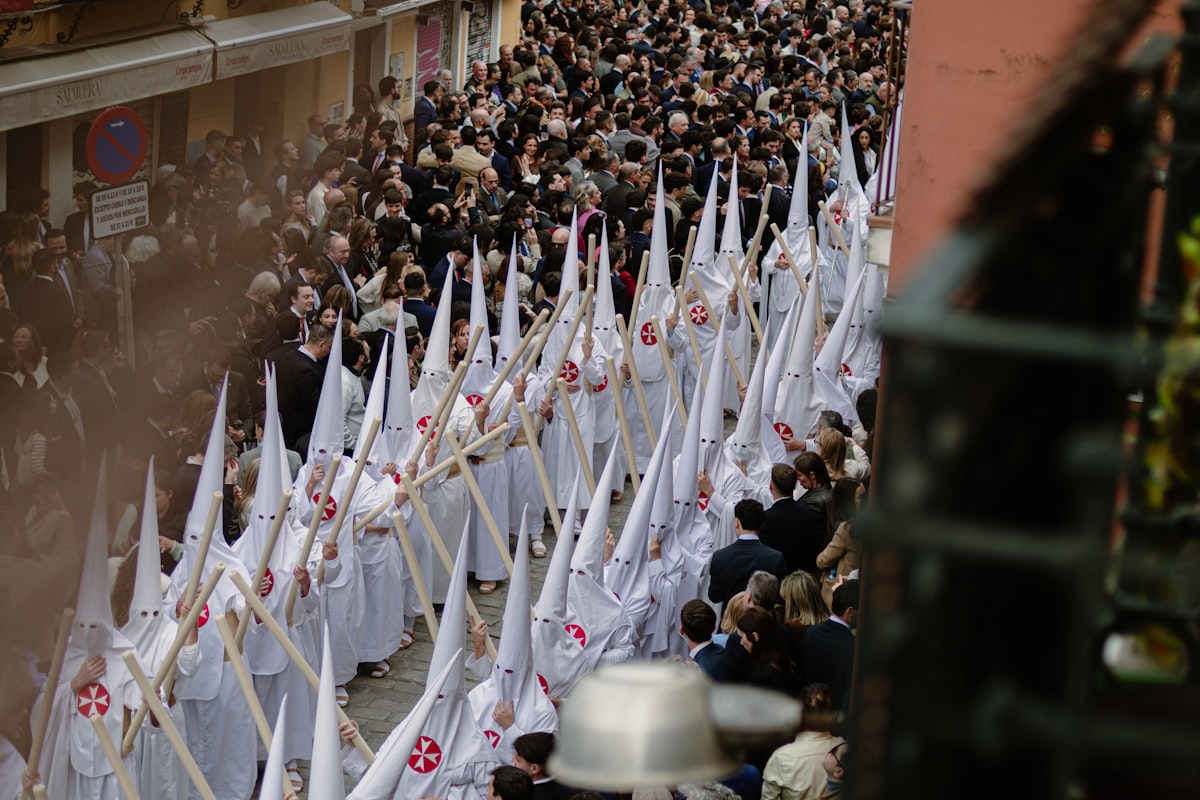
Holy Week in the Philippines is unlike anywhere else. The country's deep Catholic roots — shaped by over 300 years of Spanish colonial Christianity — combine with distinctly Filipino communal traditions to produce a week that feels genuinely different from any other religious season on the calendar.
For many Filipinos, it is a time for prayer, reflection, family gatherings, and traditions that their grandparents observed and that they now pass on. For others, it is the longest break of the first half of the year, marking the shift from school term to summer. For visitors and newcomers, it is a window into one of the most culturally rich and layered seasons in Southeast Asia.
This guide covers Holy Week day by day, explains the key traditions, and tells you what to expect if you are living through or planning around the season.
For a closer look at the most solemn days, see Maundy Thursday and Good Friday in the Philippines Explained.
When is Holy Week in the Philippines?
Holy Week falls in the weeks before Easter Sunday and moves each year because Easter is calculated based on the lunar calendar. It typically falls between late March and mid-April.
The week begins with Palm Sunday and ends with Easter Sunday. The key public holidays are Maundy Thursday and Good Friday, both of which are official regular holidays in the Philippines.
| Day | Filipino Name | What it Commemorates |
|---|---|---|
| Palm Sunday | Linggo ng Palaspas | Jesus's triumphal entry into Jerusalem |
| Monday-Wednesday | Lunes-Miyerkules Santo | Days of preparation |
| Maundy Thursday | Huwebes Santo | Last Supper, washing of feet |
| Good Friday | Biyernes Santo | Crucifixion and death of Jesus |
| Black Saturday | Sabado de Gloria | Christ in the tomb; vigil |
| Easter Sunday | Linggo ng Pagkabuhay | Resurrection of Jesus |
Why Holy Week matters so much in the Philippines
The Philippines is home to the third-largest Catholic population in the world, after Brazil and Mexico. An estimated 80-86% of Filipinos identify as Catholic, and Holy Week remains one of the clearest expressions of that identity — not just individually but communally and nationally.
Beyond religion, Holy Week matters in the Philippines because it shapes:
- Family movement — millions of Filipinos travel to their home provinces for the break
- Business and commerce — offices close, malls reduce hours, transport becomes strained
- Cultural continuity — traditions like Pabasa, Visita Iglesia, and Senakulo are passed down through families and communities
- The Filipino calendar — Holy Week marks the midpoint between New Year and the school year, overlapping with peak summer travel
Holy Week day by day
Palm Sunday (Linggo ng Palaspas)
Palm Sunday opens Holy Week and commemorates Jesus's entry into Jerusalem, when the crowd laid palm branches before Him. In the Philippines, this day is marked by the blessing of palaspas — woven palm fronds — distributed at church at the start of Mass.
Many families keep their blessed palaspas at home, often hung above doorways or on the wall, sometimes carried from year to year. In some regions, these are burned the following Ash Wednesday.
Holy Monday, Tuesday, and Wednesday
The early days of Holy Week are traditionally quiet. Church attendance increases gradually. Many households begin the Pabasa — the continuous chanting of the Pasyon — during this stretch. Preparations are made for the heavier observances later in the week.
Maundy Thursday (Huwebes Santo)
Maundy Thursday is the first of the two main public holidays of Holy Week. It commemorates the Last Supper and is marked by:
- Washing of the Feet (Paghuhugas ng Paa) — the central church ritual; priests wash the feet of 12 community members
- Mass of the Lord's Supper — the Eucharistic Mass of the evening; the Blessed Sacrament is transferred to an Altar of Repose afterward
- Visita Iglesia — visiting seven or more churches through the night for prayer
- Pabasa ng Pasyon — continuous communal chanting of the Passion narrative
- Alay Lakad — pilgrimage walks to shrines, most famously to Antipolo Cathedral
For a full breakdown, see Maundy Thursday and Good Friday in the Philippines Explained.
Good Friday (Biyernes Santo)
Good Friday is the most solemn day of the year for most Filipino Catholics. It commemorates the crucifixion and death of Jesus. Traditions observed include:
- Senakulo — theatrical Passion plays staged outdoors in communities
- Tres Horas (Three Hours of Agony) — church service from noon to 3:00 PM meditating on the Seven Last Words
- Self-flagellation (magdarame) — penitents who whip themselves in public procession, most concentrated in Pampanga; not endorsed by the Church
- Santo Entierro procession — the image of the dead Christ is carried through candlelit streets in the evening
Most businesses are closed or operating at minimal capacity. Many families avoid loud entertainment, meat, and unnecessary activity.
Black Saturday (Sabado de Gloria)
Black Saturday is the day between death and resurrection — the vigil. In older tradition, this was a mournful day; in modern Filipino practice, it has become something of a transitional day, with some families beginning to relax the solemnity of Good Friday.
The Easter Vigil Mass is held on Saturday night — the most solemn and elaborate Mass of the Catholic liturgical year. It begins in darkness with the lighting of the Paschal candle and moves through scripture readings, Baptism rites, and the proclamation of the Resurrection.
Easter Sunday (Linggo ng Pagkabuhay)
Easter Sunday is the celebration of Christ's resurrection. The day typically begins with a very early morning Mass, sometimes at 4:00 or 5:00 AM. Before dawn, many parishes hold the Salubong — a reenactment of the risen Christ meeting the Blessed Virgin Mary. Two processions converge, an angel descends (often a child lowered on a platform) and removes Mary's black veil, revealing a white veil beneath — signaling that mourning has ended.
Easter Sunday is a day of celebration. Families gather, eat, and mark the end of the Lenten season.
The Pasyon and Pabasa: The heart of Holy Week
The Pasyon is a narrative poem written in Old Tagalog verse, first composed in 1704 by Gaspar Aquino de Belén. It tells the full story of Christ's life, suffering, death, and resurrection in sung form. The Pabasa ng Pasyon — the continuous communal reading or chanting of this text — is one of the most distinctive Holy Week traditions in the Philippines.
It is held in homes, covered courts, and community halls. Participants take turns chanting from printed booklets. Candles burn. Neighbors come and go. It can last through the night and into the next morning.
For many Filipinos, the Pabasa is the tradition most closely linked to memory, grandparents, and the feeling of Holy Week in the province.
Holy Week and travel
Holy Week is one of the biggest travel periods of the Philippine year. Millions of workers and families based in Metro Manila and other major cities travel home to their provinces for the break.
What this means practically:
- Plane tickets sell out weeks in advance; book early
- Bus terminals at PITX, Cubao, Pasay, and Sampaloc overflow from Wednesday evening
- Ferry services to Visayas and Mindanao are heavily booked
- EDSA and all major expressways experience peak congestion on Maundy Thursday
- The return surge happens Easter Sunday and the day after
If you are traveling for Holy Week, book transport as early as possible — at least 3-4 weeks ahead.
Holy Week food traditions
The Catholic Church prescribes abstinence from meat (and fasting, for those of the appropriate age and health) on Ash Wednesday, all Fridays of Lent, and Good Friday. In practice, Filipino families vary in how strictly they observe this.
Common Holy Week dishes:
- Sinigang na isda (sour fish soup)
- Pinangat (fish in gata)
- Kare-kare prepared without meat (made with vegetables only)
- Ginataang gulay (vegetables in coconut milk)
- Tinolang isda
- Dried fish (tuyo, danggit, daing) with rice and vinegar
- Champorado (chocolate rice porridge, often paired with tuyo)
What is typically closed or different during Holy Week?
| Maundy Thursday | Good Friday | Black Saturday | Easter Sunday | |
|---|---|---|---|---|
| Government offices | Closed | Closed | Some open | Open |
| Banks | Closed | Closed | Some branches | Open |
| Malls | Reduced hours | Mostly closed | Reopening | Open |
| Restaurants | Reduced | Very limited | Varies | Open |
| Public transport | Running (busy) | Running (reduced) | Running | Normal |
Frequently asked questions
What are the public holidays during Holy Week in the Philippines?
Maundy Thursday and Good Friday are official regular holidays. Palm Sunday, Black Saturday, and Easter Sunday are not official public holidays but are widely observed.
Can I travel during Holy Week in the Philippines?
Yes, but it requires advance planning. Transport is extremely congested and heavily booked. Domestic flights, long-distance buses, and inter-island ferries should be booked weeks in advance.
Is it appropriate to go to the beach during Holy Week?
It depends on your values. Resorts and beaches are open (and often busy during the Lenten break). Many Filipinos do use the break for beach trips. Traditionally, Good Friday is observed as a quiet day, and some families avoid recreational activities on that specific day.
Why do some Filipinos fast during Holy Week?
Fasting is a Catholic penitential practice — an act of sacrifice and spiritual solidarity with Christ's suffering. It is prescribed on Ash Wednesday and Good Friday and encouraged on all Fridays of Lent.
What is the Salubong?
The Salubong is a pre-dawn Easter Sunday ritual where two processions — one carrying the image of the risen Christ, one carrying the image of the Blessed Virgin Mary — converge and meet, symbolizing the joy of reunion after the sorrow of the Passion.
What is Viernes Santo?
Viernes Santo is the Spanish-derived Filipino name for Good Friday (Biyernes Santo in Tagalog). Both terms are used interchangeably.
Are non-Catholics welcome at Holy Week observances?
Yes. Most church services and public processions in the Philippines are open to respectful observers of any background. Dress modestly, maintain quiet during solemn moments, and follow the cues of the people around you.
Visita Iglesia: A tradition within the tradition
Visita Iglesia (church visit) is one of the most widely practiced Holy Week traditions in the Philippines. Done primarily on the night of Maundy Thursday, it involves visiting seven churches — or sometimes fourteen — for prayer and reflection on the Stations of the Cross.
The number seven is not random: it traditionally corresponds to the seven sorrows of the Blessed Virgin Mary or the seven falls of Jesus during the Passion. In practice, participants travel from church to church in groups — by private car, jeepney, tricycle, or on foot — pausing at each one for prayer before moving on.
In Metro Manila, popular Visita Iglesia routes include the historic churches of Intramuros, Binondo, Quiapo, Tondo, and Paco. In Cebu, the churches along Colon Street and surrounding barangays are common stops. In smaller towns, the route is typically limited to nearby chapels within the same municipality.
For many Filipinos, Visita Iglesia is as much a communal and social tradition as it is a spiritual one. Families do it together. Parish groups organize minibuses. University organizations plan routes. The streets outside popular churches fill with lights, vendors, and the quiet movement of people.
Read this next
- Maundy Thursday and Good Friday in the Philippines Explained
- Flores de Mayo in the Philippines: History, Traditions, and What to Expect
- Santacruzan Philippines: History, Sagala Roles, and What to Expect
- Best Summer Essentials for the Philippines Heat
Deeper buying and planning guide
Holy Week in the Philippines: Traditions, Meaning, and What to Expect needs to balance tradition with real-life variation. Filipino customs are not identical in every province, school, church, office, or family, so a useful guide explains the common meaning while still leaving room for local practice.
The primary keyword focus is Holy Week in the Philippines: Traditions, Meaning, and What to Expect (2026 Guide), but the page should also answer related search intent naturally: who it is for, when it matters, what to check first, what to avoid, and how to adapt the advice in the Philippines. For AI SEO, the goal is not to repeat the keyword mechanically. The goal is to give clear, extractable answers that can stand alone in a search snippet, AI Overview, or chatbot summary without losing the practical context.
How to make a smart decision
Start with the situation, not the product or idea. A student, a parent, a commuter, a remote worker, and a holiday host may all search for Holy Week in the Philippines: Traditions, Meaning, and What to Expect, but they do not need the same answer. The best decision comes from matching the recommendation to budget, timing, risk, and the consequence of getting it wrong. If a cheap option fails after one week, it may cost more than a mid-range choice. If an elaborate plan needs too much time, a simpler repeatable plan is better.
Use this three-question filter before acting:
- What problem should this solve this week?
- What detail can change before I buy, travel, cook, attend, or prepare?
- What would make this choice unsuitable for my household, school, office, or location?
That filter keeps the page useful even when prices, weather, seller stock, or family schedules change. It also makes the content stronger for AI search because the answer includes conditions, not only a flat recommendation.
Philippines-specific checklist
| Check | What to do | Why it matters |
|---|---|---|
| Requirement | Write down the real use case before comparing options | Prevents buying for a fantasy version of the week |
| Budget ceiling | Set the maximum total cost including shipping or extras | Keeps the decision realistic |
| Verification | Check seller, date, policy, size, and current availability | Avoids outdated or misleading claims |
| Local adaptation | Adjust for school, office, barangay, family, or transport rules | Philippine routines vary by place |
| After-use review | Keep what worked and remove what did not | Makes the next decision faster |
Fact-check and source notes
For culture and holiday pages, dates and official observances should be checked against government sources, especially when a post mentions a 2026 calendar. Historical context should be separated from family practice because Filipino traditions vary by region, religion, school, workplace, and household. Holy Week in the Philippines: Traditions, Meaning, and What to Expect uses that conservative approach: explain the common pattern, note where rules can change, and avoid treating one family's custom as the national standard.
Sources used for this fact-check layer:
- NHCP materials on Philippine independence and nationhood
- Supreme Court E-Library copy of Proclamation No. 1006, s. 2025 for 2026 holidays
- DTI online shopping safety tips
- DTI e-commerce FAQs on seller checks, returns, and complaints
The safest rule is to separate stable guidance from changeable details. Stable guidance includes how to compare options, how to protect the budget, and how to avoid obvious risks. Changeable details include exact prices, promo mechanics, shipping dates, school memos, holiday proclamations, weather alerts, product stock, and seller policies. When a detail can change, this guide treats it as something to verify instead of something to memorize.
SEO and AI-search answer structure
For traditional SEO, Holy Week in the Philippines: Traditions, Meaning, and What to Expect should include the main keyword in the title, introduction, headings, and supporting copy without stuffing. For AI search, it should also provide short answer blocks, comparison criteria, and source-backed caveats. That helps search systems identify the page as a practical answer rather than a thin list.
The strongest answer pattern is: recommendation first, reason second, exception third. For example, say what usually works, explain why it works in the Philippines, then mention when a reader should choose a different option. This is clearer than a long paragraph that hides the actual answer.
Existing quick-answer points to preserve:
- When is Holy Week in the Philippines?: Holy Week falls in the weeks before Easter Sunday and moves each year because Easter is calculated based on the lunar calendar. It typically falls between late March and mid-April. The week begins with Palm Sunday and ends with Easter Sunday. The key public holidays are Maundy Thursday and Good F...
- What is typically closed or different during Holy Week?: | | Maundy Thursday | Good Friday | Black Saturday | Easter Sunday | |---|---|---|---|---| | Government offices | Closed | Closed | Some open | Open | | Banks | Closed | Closed | Some branches | Open | | Malls | Reduced hours | Mostly closed | Reopening | Open | | Restaurants | Reduced | Very lim...
- What are the public holidays during Holy Week in the Philippines?: Maundy Thursday and Good Friday are official regular holidays. Palm Sunday, Black Saturday, and Easter Sunday are not official public holidays but are widely observed.
- Can I travel during Holy Week in the Philippines?: Yes, but it requires advance planning. Transport is extremely congested and heavily booked. Domestic flights, long-distance buses, and inter-island ferries should be booked weeks in advance.
Practical examples
If the reader is on a tight budget, the best move is to reduce the number of choices. Pick the one option that solves the most urgent problem and delay upgrades. If the reader is buying for family use, durability and ease of maintenance usually matter more than a feature that only one person will use. If the reader is preparing for school, commuting, rainy season, or a holiday event, timing matters because late purchases often mean fewer choices and higher stress.
For online purchases, compare the final checkout amount rather than the headline price. Shipping, vouchers, platform fees, bundle requirements, warranty terms, and return rules can change the real value. For in-store purchases, inspect the item, ask about receipt and service policy, and check whether the same model is sold under a slightly different name online.
Common weak spots to avoid
Do not rely on one viral recommendation. Do not assume the most expensive option is automatically the best. Do not treat old prices as current. Do not ignore return policies. Do not buy a product or follow a plan only because it looks good in photos. Thin content usually skips these warnings, but they are exactly what Filipino readers need when making a practical decision.
A stronger page also avoids fake certainty. If there is no official price, say prices vary. If a practice differs by region, say it differs. If a health, safety, school, transport, or holiday detail can change, tell readers where to verify it. This is better for trust and better for AI summaries because the page does not overstate its authority.
Short answers for AI search
What is the fastest way to use Holy Week in the Philippines: Traditions, Meaning, and What to Expect?
Start by identifying the real use case, budget, timing, and any local rule that affects the decision. Then compare only the options that match those limits.
What should readers fact-check before following Holy Week in the Philippines: Traditions, Meaning, and What to Expect?
Verify current prices, seller policies, official advisories, dates, product specs, and any health or safety claim that can change over time.
How does this guide help with AI search results?
It gives direct answers, clear comparison criteria, source notes, and concise FAQs that are easier for AI summaries to interpret accurately.
What is the most common mistake?
The most common mistake is copying a generic recommendation without checking whether it fits the reader's location, budget, schedule, and actual need.
What makes this advice practical in the Philippines?
It accounts for changing prices, weather, transport, school or office rules, and household budgets instead of assuming perfect conditions.
Bottom-line recommendation
Use Holy Week in the Philippines: Traditions, Meaning, and What to Expect as a practical starting point, then verify the details that can change before acting. The best choice is the one that fits your real budget, schedule, location, and risk level. If two options look similar, choose the one with clearer terms, better evidence, easier after-sales support, and fewer hidden costs.
A useful editorial check for Holy Week in the Philippines: Traditions, Meaning, and What to Expect is whether a reader can act after one pass. If the page only says what is nice, it is still thin. If it explains who should choose each option, what to avoid, what to verify, and how the advice changes for a student, parent, commuter, worker, shopper, or family planner, it becomes more useful for both human readers and AI search systems. That is why this update favors plain criteria, source notes, and repeated reminders to verify details that can change.