
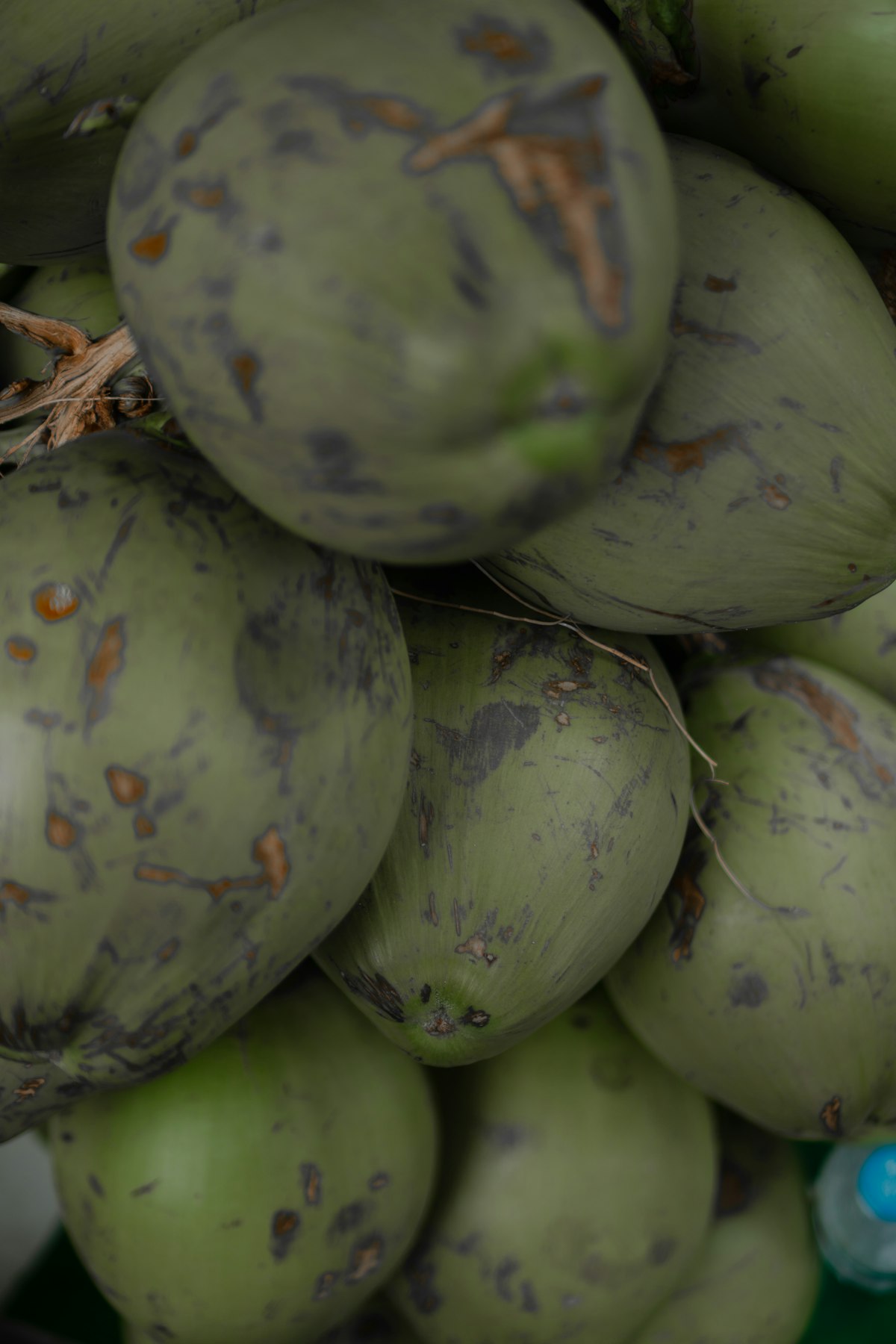
If you searched “niyog in English”, the short answer is: niyog = coconut.
But in real Filipino usage, there is one important nuance:
- Niyog is often used for mature coconut
- Buko is commonly used for young coconut
That distinction matters in recipes, grocery buying, and everyday conversation.
Quick answer
- Niyog in English: coconut (usually mature coconut)
- Buko in English: young coconut / tender coconut
If you only need a one-line translation, use that.
If you want to avoid cooking mistakes, keep reading.
Why people get confused
Online, many posts use coconut, buko, and niyog as if they mean exactly the same thing. Technically they refer to the same plant, but at different maturity and use contexts.
That is why a sentence can be “correct” in translation but still feel wrong in kitchen context.
Example:
- “Bumili ka ng buko” suggests young coconut for drinks/desserts.
- “Magkayod ka ng niyog” suggests mature coconut for grating and making gata.
Niyog vs buko: practical difference table
| Term | Usual English | Stage | Typical use |
|---|---|---|---|
| Niyog | Coconut (mature coconut) | Mature | Grated coconut, coconut milk/gata, cooking |
| Buko | Young coconut / tender coconut | Young | Coconut water, soft meat, desserts like buko salad |
This is the easiest way to remember it:
- Buko = drink + soft strips
- Niyog = grate + gata + heavier cooking
In Filipino cooking: when to use which word
Use buko when the recipe needs young coconut texture
Common examples:
- Buko salad
- Buko pie filling
- Chilled buko desserts
- Fresh coconut water drinks
Young coconut meat is softer and more delicate, so the word buko signals that texture expectation.
Use niyog when the recipe needs mature coconut extraction
Common examples:
- Freshly grated coconut
- Coconut milk (gata)
- Coconut cream bases
- Toasted coconut uses
Mature coconut is firmer and better for grating, so niyog is the more natural word in this context.
Everyday Filipino phrases and what they imply
Below are phrases that look similar in English but imply different actions in practice:
“May niyog ba?”
Usually asks if there is coconut available for grating/cooking.
“May buko ba?”
Usually asks for young coconut for drinks or desserts.
“Pabili ng niyog”
In many wet market contexts, this can imply mature coconut for kitchen prep.
“Pabili ng buko”
Often implies a younger fruit with water and soft meat.
Regional speech can vary, but this pattern is common across many Filipino households.
Translation-safe wording you can use
If you write content, labels, captions, or ecommerce copy, these are safer patterns:
For niyog
- Coconut
- Mature coconut
- Grated coconut (if prepared)
- Coconut for gata (context-specific)
For buko
- Young coconut
- Tender coconut
- Fresh young coconut meat
Avoid flattening both terms into a single “coconut” label when context matters.
Common mistakes to avoid
1) Translating both words as just “coconut”
This is not always wrong, but it removes meaning that helps readers cook correctly.
2) Using buko for mature-coconut prep instructions
If your recipe asks for grating and extracting milk, “mature coconut” or “niyog” is clearer.
3) Assuming dictionary translation is enough for food writing
Lexical translation gives baseline meaning; culinary usage gives practical meaning.
4) Ignoring audience intent
A learner searching “niyog in English” often needs both:
- direct translation
- usage difference vs buko
Give both in the first screen.
Quick decision framework
Use this 3-step check before choosing your term:
- Is the dish about soft coconut strips or coconut water?
Use buko / young coconut. - Is the dish about grating or extracting coconut milk?
Use niyog / mature coconut. - Is the context generic botany or broad ingredient talk?
Use coconut, then clarify stage if needed.
For students and translators: a safer sentence formula
When writing bilingual examples, use this format:
[Filipino term] + [English base term] + [stage/use clarification]
Examples:
- “Niyog (coconut, usually mature) is used for gata.”
- “Buko (young coconut) is used for buko salad and drinks.”
This avoids over-translation while staying readable for non-Filipino readers.
Mini glossary: related coconut words in Filipino
If your audience is learning Filipino food words, these terms are often seen with niyog and buko:
- Gata = coconut milk (usually extracted from mature coconut meat)
- Bunot = coconut husk
- Niyugan = coconut grove/plantation context
- Macapuno = a coconut variety often used in desserts
You do not need to force all of these into one article, but knowing them helps avoid incorrect substitutions when translating recipes.
Restaurant menu and ecommerce copy: best wording by context
If the item is a dessert or drink
Prefer:
- Young coconut
- Buko
- Tender coconut
Good examples:
- “Fresh buko juice”
- “Young coconut strips in cream”
- “Buko pandan dessert cup”
If the item is for cooking base or sauce prep
Prefer:
- Mature coconut
- Grated coconut
- Coconut for gata
Good examples:
- “Freshly grated mature coconut”
- “Coconut milk extraction-ready coconut”
- “Niyog for gata-based dishes”
If the audience is global and unfamiliar with Filipino terms
Use mixed format on first mention:
- “Buko (young coconut)”
- “Niyog (mature coconut)”
Then you can use short forms after context is established.
Copy-and-paste templates (for creators and store owners)
Use these if you need instant usable text:
Product label template
“Buko (Young Coconut) — soft coconut meat ideal for desserts and chilled drinks.”
Recipe line template
“Use niyog (mature coconut) if you need grated coconut or coconut milk extraction.”
FAQ snippet template
“Niyog means coconut in Filipino, commonly mature coconut; buko means young coconut.”
These templates reduce ambiguity and improve user trust, especially for first-time buyers outside the Philippines.
Quick buyer and cook checklist
Before choosing between buko and niyog, ask:
- Do I need soft strips and coconut water? → Buko
- Do I need grated flesh or gata? → Niyog
- Is this a direct translation request only? → Coconut (then clarify stage)
- Is my audience local Filipino readers? → Use Filipino term first
- Is my audience international? → Use English term first with Filipino in parentheses
This avoids most practical mistakes in both writing and cooking.
SEO note for publishers targeting "niyog in english"
For this keyword, top-performing content format is usually:
- Direct answer in first sentence
- One-line distinction vs buko
- Simple comparison table
- FAQ block with exact-match questions
If your article skips any of these, it may still rank, but user satisfaction tends to drop because readers want immediate clarity first.
Internal related guide
If you want a deeper side-by-side culinary breakdown, read:
FAQ
What is niyog in English?
Niyog in English is coconut, commonly interpreted as mature coconut in Filipino cooking context.
Is buko the same as niyog?
They refer to the same fruit family but not the same maturity stage in everyday usage. Buko is young; niyog is commonly mature.
What is buko in English?
Buko is commonly translated as young coconut or tender coconut.
Which is better for buko pie?
Buko (young coconut), because the dessert relies on soft coconut strips and young-coconut texture.
Which is better for gata?
Mature coconut (niyog), because it is more suitable for grating and extraction.
Can I still say “coconut” for both?
Yes, but add stage context when needed (young vs mature) to avoid confusion.
Sources
- Wiktionary: niyog
- Wiktionary: buko
- Wikipedia: Buko salad (young coconut context)
- Wikipedia: Coconut (Cocos nucifera reference)
Deeper SEO and fact-check guide
Niyog in English: Meaning, Buko Difference, and Correct Usage (2026) is an evergreen Philippines guide, so it needs more than a short answer. The page should explain the practical meaning, the decision process, the local context, and the facts a reader should verify before acting. That structure helps traditional SEO because it covers related intent, and it helps AI SEO because the answer is clear enough to summarize without stripping away the caveats.
What readers should decide first
Start with the situation. Who is using this information, when will it matter, and what detail can change before the reader acts? A family preparing for a holiday, a commuter planning a wet route, a shopper managing a grocery budget, and a reader checking Filipino words all need a different level of detail. The most useful answer is not the longest possible answer. It is the answer that gives the reader enough context to make a correct decision without relying on a vague rule of thumb.
Use this simple decision filter:
- What is the exact use case for this week or this season?
- Which details are stable, and which details need a current check?
- What local rule, family custom, weather condition, price change, or safety issue could change the answer?
- What is the cheapest option that still solves the real problem?
Fact-check notes
For niyog and buko, the key fact-check is usage. In ordinary Filipino speech, buko usually points to young coconut, while niyog often points to mature coconut used for grated coconut, gata, and cooking. Regional usage can vary, so examples should explain context rather than claim one rigid English equivalent for every situation.
Sources checked for this update:
The safest editorial approach is to separate facts from advice. Facts should be tied to a source or framed conservatively. Advice should be practical and conditional. If a price, date, weather condition, schedule, seller policy, local rule, or health detail can change, the page should tell readers to verify it close to the moment they need it.
Philippines-specific planning table
| Reader need | Best first step | What to verify |
|---|---|---|
| Quick answer | Read the summary and checklist first | Whether the date, price, or local condition changed |
| Family planning | Assign budget, timing, and responsibilities | Family schedule, transport, food, storage, and backup plan |
| Online shopping | Compare total checkout cost and seller terms | Reviews, warranty, shipping date, returns, and product identity |
| Safety or health | Use conservative advice and avoid risky shortcuts | Official advisories, symptoms, weather, and local conditions |
| AI-search summary | Look for direct answers plus caveats | Whether the summary preserved the exceptions |
How this improves AI search quality
AI systems often prefer content that answers the question directly, then explains exceptions. A thin page may say what something means, what to buy, or what to do, but it often omits the conditions that make the answer true. This update adds those conditions: location, timing, weather, budget, safety, family practice, product verification, and source checking.
For a reader, that means fewer surprises. For search, it means the page is more likely to be understood as a practical Philippine guide rather than a generic list. The goal is not keyword stuffing. The goal is to make the article complete enough that the title, headings, direct answers, table, source notes, and FAQ all point to the same intent.
Practical examples
If the topic involves a date or observance, check the current government proclamation, school or workplace memo, and local announcement before making plans. If the topic involves weather or heat, check the current forecast or heat index instead of relying only on seasonal memory. If the topic involves groceries, compare the price on the shelf with the final online checkout amount because delivery, vouchers, bundles, and substitutions can change the true cost. If the topic involves Filipino terms, include examples because the same English word can miss the cultural or cooking context.
Common mistakes to avoid
Do not present one family's practice as the only Filipino practice. Do not treat old prices as current prices. Do not ignore local advisories. Do not use a single English translation when context matters. Do not make health or safety claims stronger than the sources support. Do not create a checklist so complicated that a normal household will never use it.
Short answers for AI search
What is the main point of Niyog in English: Meaning, Buko Difference, and Correct Usage (2026)?
The main point is to give a practical Philippines-specific answer, then show what details must be verified because prices, dates, weather, rules, and local customs can change.
What should readers fact-check first?
Readers should fact-check official dates, weather or heat advisories, current prices, seller terms, local rules, and any safety or health claim before acting.
Why is local context important?
Local context matters because Philippine routines differ by province, city, school, workplace, barangay, family, and season. A good answer should explain the usual pattern without pretending every situation is identical.
How can this page stay useful after 2026?
It stays useful by focusing on decision rules and source checks, not only temporary details. Readers can reuse the framework and update the current facts when needed.
Bottom line
Use Niyog in English: Meaning, Buko Difference, and Correct Usage (2026) as a decision framework, then verify the details that can change. The best SEO answer is clear, source-aware, and practical enough for a reader to act on without overclaiming.
A final quality check for Niyog in English: Meaning, Buko Difference, and Correct Usage (2026) is whether the article gives readers enough context to act without guessing. The normal answer should be easy to find, but the exceptions should be visible too. That balance keeps the guide useful when local details change.
The page should also avoid pretending that every reader has the same budget, schedule, location, or family setup. A practical Philippine guide works better when it explains how to adapt the advice for different households, cities, schools, offices, and seasons.
For SEO, the extra depth matters because it connects the main keyword to related questions. For AI search, the same depth matters because short summaries need source-aware caveats, not just a one-line recommendation.
Readers should leave with a clear next step: check the current source, compare the local detail, and choose the option that fits real constraints. That is stronger than a long article that never tells the reader what to verify.
When the content is refreshed again, the best update is not another generic paragraph. The best update is a current detail, a better example, a source correction, or a clearer warning about what can change.