
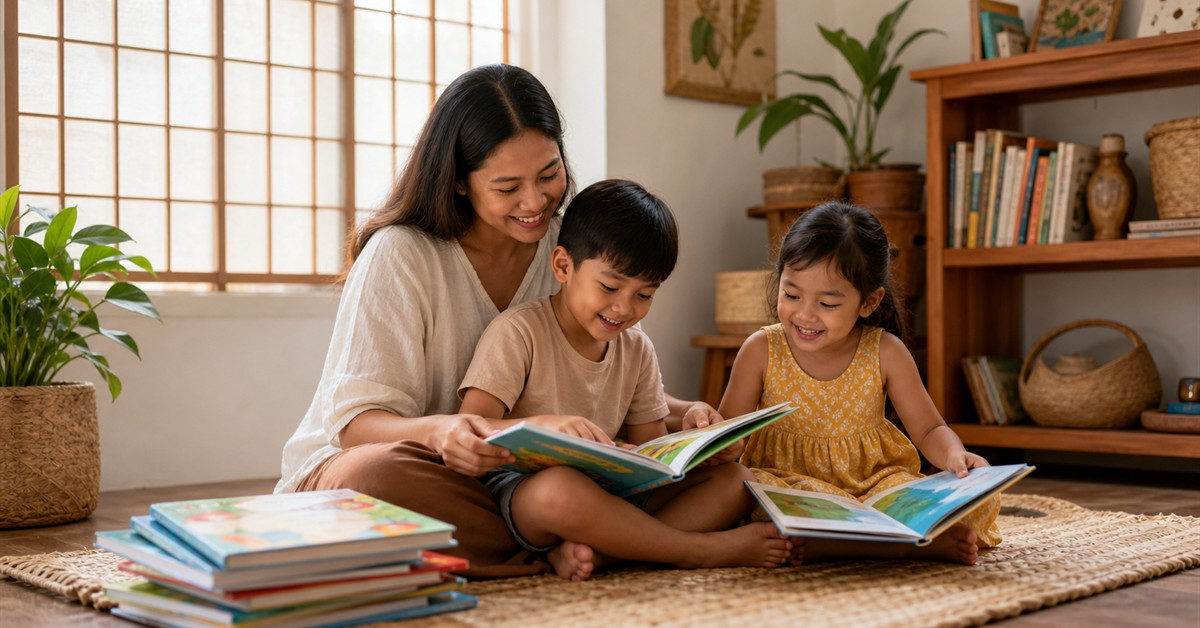
The best storybooks for Filipino kids in 2026 are the ones adults can read aloud again and again without the child getting bored. For most families, that means a mix of sturdy board books, familiar Filipino settings, funny animals, classic folktales, and picture books that open a real conversation after bedtime or merienda.
If you are buying for a baby or toddler, choose board books first. If you are buying for a preschooler, choose colorful Filipino picture books with everyday scenes. If you are buying for a Grade 1 to Grade 4 reader, add folktales, value stories, and books with richer language. Older kids can handle longer, stranger, funnier, or more emotional stories.
This 2026 guide focuses on Filipino storybooks that make sense for Filipino homes: books parents, titas, ninongs, lolos, and teachers can buy online, gift easily, and actually read with children.
If you are shopping beyond children's storybooks, see our broader best books Philippines guide. For non-book learning gifts, compare options in our best robot toys Philippines guide. For exchange-gift ideas, the something you can read Monito Monita guide also has book-focused gift prompts.
Our top picks
- BEST FOR TODDLERSDumaan si Butiki Board Book₱279-₱349Check price
- BEST EVERYDAY STORYAraw sa Palengke Picture Book₱120-₱150Check price
- BEST STARTER SETAklat Adarna Volume 1₱450-₱500Check price
- BEST CLASSIC FOLKTALESi Pagong at si Matsing₱120-₱150Check price
- BEST HEARTFELT PICKPapel de Liha₱120-₱150Check price
TL;DR: best storybooks for Filipino kids 2026
| Pick | Best for | Suggested age | Why it works |
|---|---|---|---|
| Dumaan si Butiki Board Book | Toddlers | 0+ | Sturdy format, repetition, animal movement |
| Bahay Kubo Board Book | Songs and Filipino words | 0+ | Familiar song, vegetables, language exposure |
| Araw sa Palengke | Everyday Filipino life | 5+ | Palengke setting, family routine, visual details |
| Aklat Adarna Volume 1 | Starter library | 4+ | Multiple stories in one giftable volume |
| Si Pagong at si Matsing | Classic folktale | 7+ | Trickster story, Filipino cultural memory |
| Ibong Adarna Board Book | Classic intro | 3+ | Gentle way to introduce a Filipino epic |
| Papel de Liha | Parent-child bond | 7+ | Emotional but simple, strong read-aloud ending |
| Ang Mahiyaing Manok | Confidence and feelings | 8+ | Helpful for shy children and classroom reading |
| Ang Pambihirang Buhok ni Lola | Lolo/lola story | 11+ | Stronger language, family, folklore feel |
| Where Did All the Fireflies Go? | Environment | 6+ | Nature, curiosity, Filipino/English editions |
Prices are practical online-shopping ranges based on publisher pages and Philippine marketplace search results checked in May 2026. Book prices and stock change often, especially around back-to-school season, 9.9, 11.11, and Christmas.
How we chose these Filipino kids' storybooks
We chose books using a parent-and-reader lens, not just nostalgia:
- Filipino setting, language, character, or cultural relevance
- Age fit for babies, toddlers, preschoolers, and grade-school children
- Read-aloud strength: rhythm, repetition, humor, or emotional payoff
- Availability through Philippine publishers, Shopee, Lazada, or bookstore sellers
- Giftability for birthdays, binyag, Christmas, moving-up ceremonies, and school rewards
- Re-read value, because a good children's book survives the fifth and tenth reading
We also considered the basic reading guidance behind early literacy. Pediatric groups such as the American Academy of Pediatrics recommend literacy promotion and shared reading from early childhood because books support language, bonding, attention, and school readiness. In real Filipino homes, the most important rule is simpler: choose books adults will actually open with the child.
Best storybooks for Filipino kids
Dumaan si Butiki Board Book
Our verdict: The safest first pick for babies and toddlers because it is sturdy, rhythmic, and easy for adults to act out.
For the youngest Filipino kids, durability matters as much as the story. Dumaan si Butiki Board Book is a good first buy because toddlers can point, grab, repeat, and move along with the animal action without destroying a thin-paper picture book on day one.
Adarna lists this title as a board book with an age recommendation of 0+, which is exactly the format you want for babies and toddlers. It is also easy for adults to read with sound effects and gestures: butiki crawling, children pointing, and everyone repeating lines before bedtime.
This is not the book you buy for a Grade 3 child who wants a longer plot. It is the book you buy when you want a small child to associate books with play, touch, and attention from an adult.
What we like
- Board-book format is toddler-friendly
- Filipino language exposure from the start
- Easy to read aloud with actions
- Good gift for babies and preschoolers
- Sturdier than thin picture books
Watch out for
- Too simple for older kids
- Board books cost more than thin paperbacks
- Stock can vary by seller
- Best when an adult reads with the child
Bahay Kubo Board Book
Our verdict: The best Filipino song-to-book pick for toddlers because the words, rhythm, and vegetables are already part of local childhood.
Bahay Kubo Board Book works because many Filipino adults already know the song. That removes the biggest barrier to reading aloud: the adult does not have to perform a new story perfectly. They can sing, point at vegetables, repeat words, and let the child join when ready.
For families raising children with more English than Filipino at home, this is also an easy language bridge. Vegetables like sitaw, bataw, patani, kundol, patola, upo, and kalabasa become less intimidating when they arrive with rhythm and pictures.
Buy this for babies and toddlers, but keep expectations realistic. It is a language-and-song book, not a deep plot. The value is repetition.
What we like
- Familiar Filipino song
- Great for vocabulary and repetition
- Good for grandparents reading to toddlers
- Compact and giftable
- Works even when the child cannot read yet
Watch out for
- Not a plot-heavy story
- Some children may outgrow it quickly
- Vegetable words need adult explanation
- Can overlap with other Bahay Kubo editions
Araw sa Palengke Picture Book
Our verdict: The best overall Filipino picture book for preschoolers because the palengke setting feels real and easy to talk about.
If you only want one Filipino picture book to start a home shelf, Araw sa Palengke is the safest pick. The setting is familiar even to children who have only seen a wet market from the car or heard adults talk about buying ulam. The story gives children things to notice: vendors, food, colors, sounds, and the small excitement of going somewhere with an adult.
This is the kind of book that works beyond the text. Ask the child what they would buy. Point to fruits, fish, baskets, and people. Compare the story to your own palengke, grocery, talipapa, or weekend market routine.
The publisher page lists it as a picture book for age 5+, but it can also work for younger preschoolers if an adult reads and explains.
What we like
- Very Filipino everyday setting
- Strong picture-talk value
- Good for preschool and early grade school
- Easy to connect to family errands
- Affordable paperback pricing
Watch out for
- Needs adult explanation for children unfamiliar with palengke trips
- Paperback can wear out with toddlers
- May feel too simple for older fluent readers
- Stock and edition can vary online
Aklat Adarna Volume 1
Our verdict: The best starter-library gift because it gives several Filipino stories in one present instead of one thin paperback.
Aklat Adarna Volume 1 is the practical gift when you are not sure which single story a child already owns. Instead of buying one title, you get a collection of multiple Adarna stories in one volume. That makes it useful for teachers, ninangs, grandparents, and parents building a small home library.
The main advantage is variety. A child may not connect with every story, but one or two will usually become favorites. For families trying to make reading a routine, that matters. A multi-story book gives adults more options without hunting for the next title immediately.
The tradeoff is format. A bigger collected volume is less toddler-proof than board books and less portable than a thin paperback. It is best for preschool and early-grade read-aloud time with adult supervision.
What we like
- Multiple stories in one gift
- Good value for building a shelf
- Useful for families and classrooms
- Less guesswork than picking one title
- Strong introduction to Filipino children's literature
Watch out for
- Bulkier than single picture books
- Less durable for babies and toddlers
- Not every included story will fit every child
- Higher upfront price than one paperback
Si Pagong at si Matsing Picture Book
Our verdict: The best classic folktale pick because it introduces a story many Filipino adults remember and can retell with energy.
Si Pagong at si Matsing is one of the easiest Filipino folktales to recommend because the setup is simple: turtle, monkey, cleverness, fairness, and consequences. Children understand the conflict quickly, and adults can pause to ask who is being fair, who is being greedy, and what the child thinks will happen next.
This book is best for children who can already follow a short plot. Younger preschoolers may enjoy the animals, but grade-school children get more from the trickster logic and moral choices.
Buy this when you want a Filipino classic that does not feel like a textbook. Read it aloud once, then ask the child to retell it in their own words. That retelling is where the learning happens.
What we like
- Classic Filipino animal folktale
- Good for retelling and discussion
- Affordable paperback
- Works for home and school
- Teaches fairness without sounding like a lecture
Watch out for
- Less ideal for toddlers
- Some editions may differ by seller
- Needs adult framing for the moral lesson
- Kids who dislike folktales may prefer modern settings
Ibong Adarna Board Book
Our verdict: The easiest way to introduce a Filipino literary classic before a child is ready for the long school version.
The full Ibong Adarna can be intimidating for children, especially if their first encounter is as a school requirement. A board-book version lowers the pressure. It lets younger children meet the bird, the royal quest, and the idea of a Filipino classic without asking them to decode a long poem or memorize details.
This is best for families who want culture exposure early. It will not replace the original text later in school, but it can make that future encounter feel less strange.
Pair it with questions: What color do you imagine the bird? Why would someone go on a difficult journey? What kind of song would heal a person? Those questions matter more than making a preschooler master the whole plot.
What we like
- Gentle intro to a Filipino classic
- Board-book durability
- Good for culture exposure
- Works before formal school study
- Giftable for young children
Watch out for
- Simplified compared with the full epic
- Not enough for older students studying the original
- May need adult explanation
- Some families may prefer the full story later
Papel de Liha Picture Book
Our verdict: The best emotional read-aloud pick for parent-child bonding because it turns everyday hands and work into affection.
Papel de Liha is one of those books that adults often appreciate as much as children. It is simple on the surface, but the emotional center is strong: a child noticing a parent's hands, work, roughness, and love.
This is a better pick for children old enough to understand comparison and tenderness. It also works well before Mother's Day, Father's Day, family day, or any lesson about appreciation. For Filipino homes where adults work with their hands, cook, wash, repair, commute, or sacrifice quietly, the story lands.
Buy it when you want a book that is not just funny or cute. It is a small emotional nudge.
What we like
- Strong parent-child theme
- Affordable paperback
- Great for read-aloud reflection
- Good gift from child to parent or parent to child
- Fits family and values lessons
Watch out for
- More emotional than playful
- Not ideal as a first toddler book
- Some children may need help understanding the metaphor
- Paperback is less durable
Ang Mahiyaing Manok Picture Book
Our verdict: The best feelings-and-confidence pick for children who are quiet, hesitant, or nervous about performing.
Not every child is loud, confident, or ready to perform on cue. Ang Mahiyaing Manok is useful because it gives shy children a character they can recognize without making shyness a defect. For parents and teachers, it creates an opening to ask: What makes you nervous? What helps you try? When do you feel brave?
This is a good choice for children starting school, joining a program, reading aloud in class, or learning to speak up. It can also help adults avoid the common Filipino habit of teasing shy children in front of relatives.
The best use is not to force a child to "stop being shy." The better use is to name the feeling and build confidence slowly.
What we like
- Helpful for emotional literacy
- Good for shy preschool and grade-school kids
- Animal character is easy to understand
- Works for classroom guidance
- Affordable paperback
Watch out for
- Needs adult sensitivity
- Not a pure comedy pick
- Children who want action may find it quiet
- Paperback may wear with repeated class use
Ang Pambihirang Buhok ni Lola Picture Book
Our verdict: The best pick for older children who can enjoy a stranger, more imaginative Filipino family story.
Ang Pambihirang Buhok ni Lola is better for older children than toddlers. The title alone invites curiosity, and the lola-centered premise gives it a different emotional texture from the usual animal or school story.
Buy this for children who already enjoy picture books but are ready for richer language or a more unusual concept. It can work well for a family where grandparents are central to the child's life, or for a classroom discussion about how elders can be funny, powerful, strange, loving, and memorable.
Because Adarna lists this for older readers, do not treat it as a first baby gift. Use it when the child can sit through a fuller story and ask questions.
What we like
- Great lola-centered premise
- More interesting for older kids
- Good conversation starter
- Affordable paperback
- Adds variety beyond animals and school stories
Watch out for
- Not for babies or toddlers
- May be too odd for some children
- Needs a reader comfortable with Filipino
- Less universal than simpler classics
Where Did All the Fireflies Go?
Our verdict: The best nature-and-environment pick because it turns curiosity about fireflies into a child-friendly ecological story.
Where Did All the Fireflies Go? is the pick for parents who want story time to include nature. The question in the title is strong because children understand disappearance: Where did they go? Why are they gone? Can they come back?
Kahel Press/Pumplepie lists the title with language options, making it useful for families deciding between English and Filipino editions. It is a good complement to more traditional Filipino storybooks because it gives children a different kind of concern: not just good behavior, but care for the world around them.
Buy it for curious kids who ask questions about insects, rivers, trees, pollution, or night walks in the province. After reading, talk about lights, trash, water, plants, and what your own neighborhood used to look like.
What we like
- Strong environmental theme
- Good question-led title
- English and Filipino options may be available
- Useful for science and values discussion
- Different from usual folktale picks
Watch out for
- Less classic than Adarna staples
- Stock may vary outside publisher store
- May need adult explanation for environmental context
- Not as toddler-proof as a board book
What to buy by age
Babies and toddlers: board books first
For ages 0 to 3, buy board books before paperbacks. Small children chew corners, pull pages, and read with their whole body. Dumaan si Butiki, Bahay Kubo, and Ibong Adarna Board Book make sense because the format survives repeated handling better than thin picture books.
At this age, do not worry about finishing the story. Point, sing, name objects, make animal sounds, and let the child turn pages.
Preschoolers: familiar Filipino settings
For ages 4 to 6, choose books with clear pictures, familiar settings, and simple questions. Araw sa Palengke is ideal because it connects to food, family errands, and everyday Filipino life. A multi-story starter like Aklat Adarna Volume 1 also works if an adult can choose one short story at a time.
Grade-school children: folktales and feelings
For ages 7 to 10, children can handle longer plots and more abstract themes. Si Pagong at si Matsing, Papel de Liha, and Ang Mahiyaing Manok are strong because they give adults something to discuss after reading: fairness, affection, confidence, and self-awareness.
Older kids: richer language and unusual stories
For ages 10 and up, do not assume picture books are already childish. A good picture book can still work if the language, humor, or theme is strong. Ang Pambihirang Buhok ni Lola and Where Did All the Fireflies Go? can work for older children because they invite interpretation, questions, and longer discussion.
Buying tips for Filipino parents and gift-givers
First, check the edition and language. Some Filipino children's books have English, Filipino, bilingual, board-book, big-book, or paperback versions. A board book is better for toddlers, while a regular picture book is better for older children who can care for pages.
Second, check seller reliability. Publisher stores are safer for correct editions. Shopee and Lazada can be cheaper during sale dates, but verify seller ratings, photos, language, and shipping location. Books are less risky than electronics, but wrong editions and damaged corners still happen.
Third, match the book to the adult reader. A Tagalog book is valuable, but if no adult at home is comfortable reading it, the book may stay unopened. In that case, choose bilingual editions or mix Filipino and English books until the reading habit is stable.
Finally, do not overbuy at first. Three good storybooks that get read every week are better than twenty untouched books on a shelf.
Source and availability note
Publisher pages from Adarna House and Kahel Press/Pumplepie were checked in May 2026 for title details, format, age recommendations, and publisher-list prices where available. Marketplace links in this guide use Shopee and Lazada search pages so readers can compare current sellers, shipping fees, and stock.
Prices in this guide are not guaranteed. Children's book pricing in the Philippines changes during publisher promos, school season, payday sales, 9.9, 11.11, 12.12, and Christmas gifting.
Frequently asked questions
What is the best storybook for Filipino kids in 2026?
For a first Filipino storybook, choose Araw sa Palengke if the child is preschool age or early grade school. It has a familiar Philippine setting, enough visual detail for picture talk, and a story adults can connect to real family errands. For toddlers, start with Dumaan si Butiki Board Book or Bahay Kubo Board Book.
What age should Filipino kids start reading storybooks?
Children can be read to from infancy. For babies and toddlers, use board books, songs, repetition, and pointing. For preschoolers, use picture books with simple plots. For grade-school children, add folktales, values stories, Filipino classics, and books with richer language.
Should I buy Tagalog, English, or bilingual storybooks?
Buy the language your family can read aloud consistently. Tagalog and Filipino books build local language exposure, English books support school reading, and bilingual books help when the adult or child is still gaining confidence. The best language is the one that gets the book opened.
Where can I buy Filipino storybooks online?
Start with publisher stores such as Adarna House and Kahel Press/Pumplepie, then compare Shopee, Lazada, National Book Store, and local bookstore sellers. Check edition, language, seller rating, shipping fee, and estimated delivery date before buying.
Final verdict: build a small shelf first
The best storybooks for Filipino kids in 2026 are not necessarily the most expensive sets. Start with a small shelf: one board book, one everyday Filipino picture book, one folktale, one emotional family story, and one curiosity-driven book about nature or the wider world.
For most homes, that means Dumaan si Butiki, Araw sa Palengke, Si Pagong at si Matsing, Papel de Liha, and Where Did All the Fireflies Go?. Add more only after you see what the child asks to read again.