
Filipino coffee culture is in the middle of a quiet revolution. While instant 3-in-1 sachets from Nescafé and Kopiko still dominate breakfast tables in most Philippine households — and probably always will — the WFH generation that started working from their Quezon City apartments in 2020 discovered that making real coffee at home was cheaper, better, and more satisfying than instant.
The result: a growing segment of Filipino consumers who want a decent drip machine or pour-over setup, don't want to spend ₱5,000+ on a Breville, and are increasingly interested in brewing the Philippines' own distinctly excellent barako and Benguet Arabica coffees in their own kitchens.
This guide is for them: coffee makers under ₱2,000 that actually brew coffee at the right temperature, serve the right volume for a Filipino household, and are available on Shopee Philippines.
Quick comparison: best coffee makers Philippines under ₱2,000
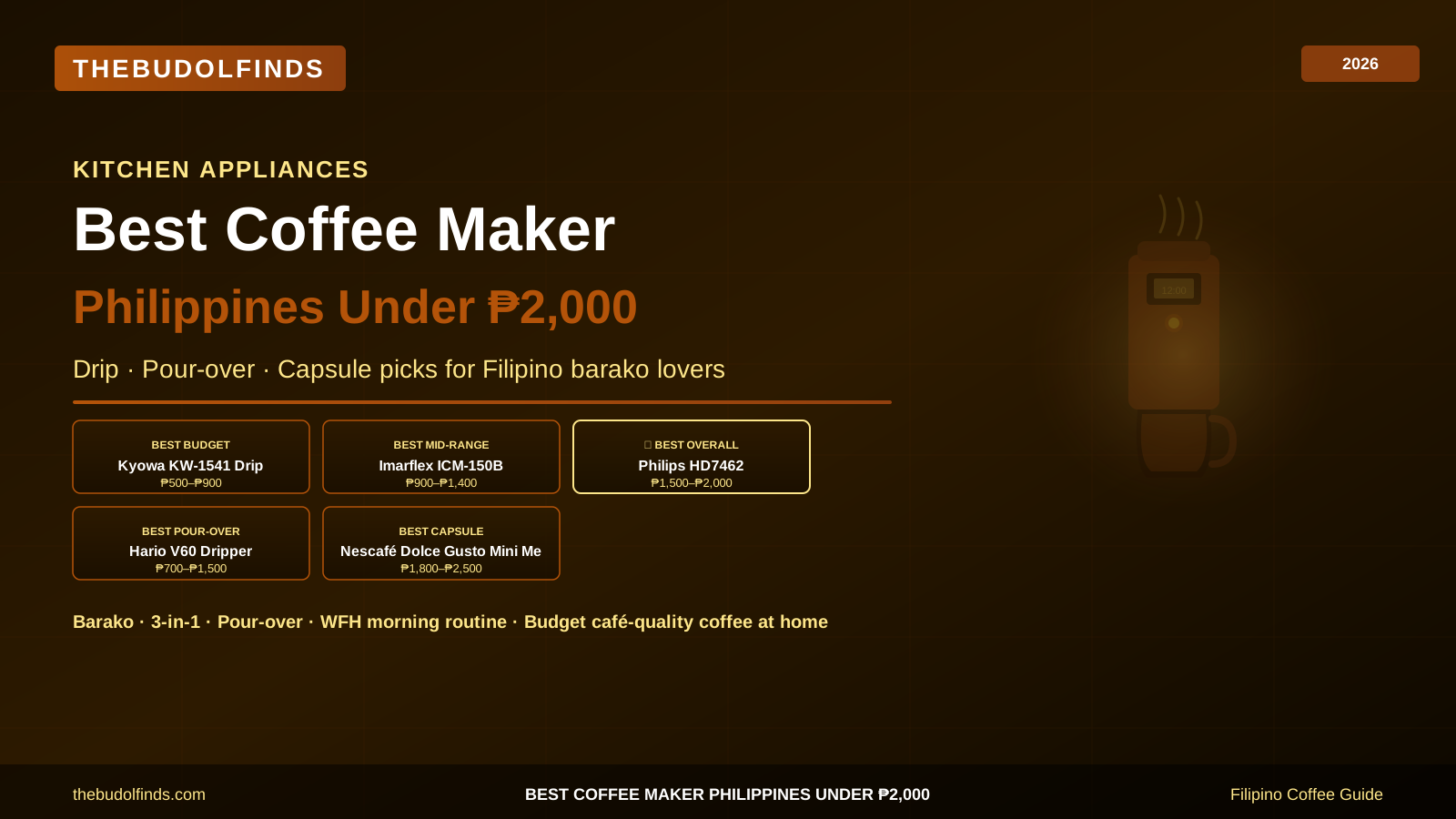
| Pick | Best for | Price | Type | Capacity |
|---|---|---|---|---|
| Kyowa KW-1541 | Budget automatic brewing | ₱500–₱900 | Drip | 600ml |
| Imarflex ICM-150B | Local brand mid-range | ₱900–₱1,400 | Drip | 1.0L |
| Hario V60 Dripper | Specialty pour-over | ₱700–₱1,500 | Pour-over | Single cup |
| Philips HD7462 | Best overall drip | ₱1,500–₱2,000 | Drip | 1.2L |
| Nescafé Dolce Gusto Mini Me | Office capsule machine | ₱1,800–₱2,500 | Capsule | Single serve |
How we chose these coffee makers
Selection criteria for Philippines conditions:
- Brewing temperature accuracy (coffee industry standard 92–96°C for proper extraction)
- Volume appropriate for Filipino household sizes (single cup to family of 6–8)
- Compatibility with Philippine barako and local ground coffee
- Ease of cleaning in Philippines humidity (mold risk in unused wet machines)
- Philippine retail availability and after-sales service
Our top picks
- BEST BUDGETKyowa KW-1541 Drip Coffee Maker₱500–₱900Check price
- BEST LOCAL BRANDImarflex ICM-150B Coffee Maker₱900–₱1,400Check price
- BEST POUR-OVERHario V60 Dripper Set Philippines₱700–₱1,500Check price
- BEST OVERALLPhilips HD7462 Drip Coffee Maker₱1,500–₱2,000Check price
- BEST CAPSULENescafé Dolce Gusto Mini Me₱1,800–₱2,500Check price
The 5 best coffee makers Philippines under ₱2,000
Kyowa KW-1541 Drip Coffee Maker
Our verdict: The best budget drip coffee maker from a recognized Philippine local brand — Kyowa's coffee maker does basic automatic drip brewing at the ₱500–₱900 price that makes it accessible for Filipino households who want an upgrade from instant sachets without significant investment.
Kyowa is one of the Philippines' most recognizable local appliance brands — their coffee maker line offers the most affordable entry point to automatic drip brewing for Filipino consumers. The KW-1541 is a compact 600ml capacity machine with a permanent filter (no paper filter needed), a warming plate, and the basic on/off switch that defines entry-level drip machines.
Honest performance assessment: the main limitation of budget drip machines at ₱500–₱900 is brewing temperature. Premium drip machines reach 92–96°C (the coffee industry standard for proper extraction). Budget machines frequently plateau at 80–88°C — the lower temperature produces a weaker, more sour cup because coffee solubles don't fully extract below 90°C. For Nescafé 3-in-1 drinkers transitioning to ground coffee, the difference is noticeable compared to premium machines, but still produces a superior result to instant sachets.
Philippine availability: Kyowa appliances are available at SM Appliance Center, Automatic Centre, Abenson, and nationwide hardware stores — making replacement or service accessible from anywhere in the Philippines.
What we like
- ₱500–₱900 — most affordable automatic drip machine from Philippine local brand
- Kyowa brand available at SM Appliance Center nationwide
- Compact size ideal for Philippine condo kitchen countertops
- Permanent filter included — no paper filter purchase needed
- 600ml capacity — 3–4 cups for single/couple Filipino household
- Simple on/off operation for non-coffee-geek Filipino users
Watch out for
- Brewing temperature lower than premium machines — may produce weaker cup
- 600ml limited for families or WFH households that drink multiple cups
- No programmable timer or temperature control
- Warming plate on low-end units may dry out coffee quickly
- Limited durability evidence vs. premium alternatives at 12–24 month mark
- No grinder compatibility guidance for barako whole bean users
Imarflex ICM-150B Coffee Maker
Our verdict: The best coffee maker from a Philippine local brand in the ₱900–₱1,400 range — Imarflex ICM-150B brings a larger 1.0L carafe and improved temperature performance over budget options at a price point that serves Filipino families who brew 6–8 cups in the morning.
Imarflex is one of the Philippines' legacy appliance brands — their ICM-150B drip coffee maker is a popular mid-range choice at SM Appliance Center and Abenson, recognizable to Filipino shoppers who've bought Imarflex blenders, rice cookers, and ovens for their homes.
1.0L capacity for Filipino households: the ICM-150B's larger carafe serves 6–8 standard cups — practical for a Filipino family of 4–5 where multiple family members want morning coffee, or for a WFH household where multiple brews throughout the day are normal. The 600ml Kyowa serves 3–4 cups; the Imarflex serves the next tier of Filipino household size.
Philippine context: barako brewing with Imarflex: Filipino barako coffee from Batangas is medium-coarse ground and brews well in standard drip machines. The Imarflex permanent filter accommodates medium-coarse barako grounds — Filipino consumers who buy ground barako from Shopee Batangas sellers can brew directly in the Imarflex without paper filters.
What we like
- ₱900–₱1,400 — Philippine mid-range pricing with local brand availability
- Imarflex Philippine service network for repairs and parts
- 1.0L carafe — serves Filipino family of 4–5 in a single brew cycle
- Permanent filter accommodates Philippine barako ground coffee
- Available at SM Appliance Center, Abenson, Lazada Philippines
- Larger footprint but still fits standard Philippine kitchen counter
Watch out for
- Temperature performance still below specialty machines — 85–90°C range typical
- 1.0L is smaller than Philips HD7462 1.2L for larger Filipino families
- No programmable timer for auto-start morning coffee
- Carafe warming plate may reduce coffee quality if left over 30 minutes
- Less precise pour control vs. gooseneck kettle pour-over methods
- Limited coffee community reviews compared to international brands
Hario V60 Dripper Pour-Over Set
Our verdict: The best coffee brewing method for specialty coffee quality in the Philippines under ₱1,500 — Hario V60's pour-over technique produces café-quality extraction of Philippine barako, Sagada Arabica, and specialty beans at home with no electrical components to fail and brewing control that no automatic machine matches.
Hario is a Japanese glassware and coffee equipment brand — their V60 dripper is arguably the most iconic pour-over brewing device in the specialty coffee world. The name comes from the 60-degree angle of the cone — a design that creates a single spiral drain hole at the bottom, producing optimal extraction flow rate when paired with the correct grind and pour technique.
Why pour-over produces better coffee for Philippine specialty beans: automatic drip machines brew at a fixed flow rate through a fixed pattern — acceptable for commodity coffee but not optimal for showcasing the distinct flavor profiles of Philippine Batangas barako (fruity, chocolatey) or Sagada Arabica (floral, bright acidity). Pour-over allows the brewer to control: bloom timing (30-second pre-infusion saturates grounds evenly), pour rate (slower pour = more extraction of complex flavors), and total brew time (2–3 minutes for V60).
Non-electric brownout advantage: the Hario V60 requires only hot water (from an electric kettle or stovetop pot) — making it the only coffee option in this guide that works during Philippine brownouts. A gooseneck kettle for precise pour (₱500–₱1,500 on Shopee) is the recommended pairing for V60 brewing.
What we like
- Best cup quality available for Philippine specialty coffee under ₱1,500
- No electrical components — works during Philippine brownouts with stovetop water
- Hario Japanese quality — glass or ceramic V60 lasts indefinitely with proper care
- ₱700–₱1,500 total setup cost (dripper + filters + server) is affordable
- Full control over brewing variables for specialty coffee optimization
- V60 filters widely available on Shopee Philippines
Watch out for
- Requires manual attention — cannot walk away like automatic drip machine
- Single cup at a time — not suitable for Filipino family batch brewing
- Hario V60 paper filters are ongoing consumable cost
- Learning curve for proper bloom and pour technique
- Requires additional gooseneck kettle for best results (extra cost)
- Less practical for weekday morning rush when Filipinos need speed
Philips HD7462 Gaia Drip Coffee Maker
Our verdict: The best overall coffee maker for the Philippines under ₱2,000 — Philips HD7462 brews at the correct 92–96°C extraction temperature, accommodates Philippine barako and specialty ground coffee in its permanent filter, serves 8–10 cups for Filipino family brewing, and comes with the Philips Philippines service network for local after-sales support.
Philips is one of the most trusted household appliance brands in the Philippines — their HD7462 Gaia coffee maker is their entry-level drip machine and represents the exact sweet spot between budget commodity machines and expensive specialty equipment.
Optimal Brew technology: the defining feature of the Philips HD7462 over budget alternatives is its brewing temperature. Philips states the HD7462 reaches 92–96°C — the Specialty Coffee Association of America (SCAA) standard for proper coffee extraction. The difference between brewing at 85°C (typical budget machine) and 94°C (Philips HD7462) is dramatic in cup quality: proper extraction temperature produces a balanced coffee with full flavor, natural sweetness, and appropriate acidity. Under-temperature brewing produces a weak, sour, flat cup regardless of coffee quality.
Barako brewing with Philips HD7462: Philippine barako (Coffea liberica) ground coffee brews excellently in the HD7462. Use 1–1.5 tablespoons per cup (6–8 tablespoons for a full 1.2L carafe), medium-coarse grind, the permanent Philips filter. The HD7462's temperature performance extracts barako's characteristic bold, fruity, dark body fully — producing the authentic kapeng barako experience that under-temperature budget machines fail to deliver.
Philips Philippines service: Philips operates authorized service centers in Metro Manila (multiple locations), Cebu, Davao, and other major Philippine cities. Coffee makers purchased from authorized Philips Philippines dealers include a 1–2 year warranty honored locally — a significant advantage over gray market and no-brand alternatives.
What we like
- 92–96°C brewing temperature — proper coffee extraction vs. under-temperature budget alternatives
- 1.2L glass carafe — serves 8–10 cups for Filipino family or WFH team
- Permanent filter compatible with Filipino barako and specialty ground coffee
- Philips Philippines service centers — 2-year warranty coverage
- Removable filter holder for easy Philippine humidity cleaning
- AromaSwirl design for even coffee extraction across all grounds in filter
Watch out for
- ₱1,500–₱2,000 — top of the Philippine under-₱2,000 drip machine range
- No programmable timer — manual start only
- Glass carafe fragile in Philippine kitchen environments
- Warming plate eventually dries out coffee after 30+ minutes — use thermal carafe habit
- Slightly larger footprint than budget alternatives for small condo Philippine kitchens
- Not for espresso — drip only, no steam or pressure
Nescafé Dolce Gusto Mini Me
Our verdict: The best capsule coffee machine option for Philippine offices and households that want café-style drinks (cappuccino, latte, iced coffee, hot chocolate) without espresso machine complexity — Dolce Gusto Mini Me produces barista-quality drinks from pre-dosed capsules at the press of a button, though capsule cost is the ongoing consideration.
Nescafé Dolce Gusto is a capsule coffee system by Nestlé — the Mini Me is the compact model designed for home and small office use. Unlike Nespresso (which is espresso-only) or drip machines (black coffee only), the Dolce Gusto system supports over 30 drink varieties from their capsule range: cappuccino, latte macchiato, flat white, mocha, iced coffee, Milo (literal Milo capsules for Filipinos who want hot Milo at the push of a button), and more.
Philippine office use case: in a Filipino office with 4–8 WFH-alternating workers, the Dolce Gusto Mini Me provides café-style coffee variety without a dedicated barista or complicated espresso equipment. The capsule ensures consistent quality regardless of who makes the coffee — important in office settings where coffee making is communal.
Capsule cost reality for Filipino consumers: each Dolce Gusto capsule costs approximately ₱25–₱40 per drink. A medium-income Filipino who makes 2 coffees daily = ₱50–₱80/day = ₱1,100–₱1,760/month in capsule costs. Compare to drip machine: 250g bag of barako ground coffee at ₱150–₱350 makes approximately 25–30 cups = ₱5–₱14 per cup. Capsule cost is 3–6x more per cup than drip coffee. The capsule trade-off is convenience and variety vs. cost efficiency.
What we like
- 30+ drink variety (cappuccino, latte, iced coffee, Milo) from one machine
- No coffee knowledge required — press button, drink ready in 1 minute
- Compact footprint for Philippine condo and office kitchens
- Consistent quality regardless of who operates it — ideal for office use
- Cold drinks capability — iced latte, iced cappuccino in Philippine summer
- Nescafé brand with Philippine Nestlé service support
Watch out for
- Ongoing capsule cost: ₱25–₱40/drink vs. ₱5–₱14 for drip-brewed barako
- Machine cost (₱1,800–₱2,500) + capsule dependency = higher long-term cost than drip
- Plastic capsule waste environmental concern
- Limited to Dolce Gusto capsule range — cannot use own barako coffee
- Slightly above the ₱2,000 price point of this guide
- Nespresso competitor offers better espresso quality but limited flavor variety
Coffee brewing guide for Filipino mornings
Barako coffee guide: the Filipino coffee experience
Philippine barako (Coffea liberica) is one of the world's most distinctive coffee varieties — grown primarily in Batangas (Lipa, San Jose) and Cavite in the Philippines. Flavor profile:
- Aromatics: heavy, full, almost perfume-like floral scent
- Body: thick, full-bodied compared to Arabica
- Flavor: bold, slightly fruity, sometimes described as jackfruit or berry notes
- Finish: long, chocolatey aftertaste
Best brewing methods for barako in order of flavor quality:
- Pour-over (Hario V60) — best extraction of barako complexity
- French press — full body, thick extraction
- Drip machine (Philips HD7462 at correct temperature) — convenient, consistent
- Drip machine (budget) — adequate, less flavor complexity extracted
Coffee cost comparison: at-home vs. Philippines café
| Coffee source | Cost per cup | Monthly (1/day) |
|---|---|---|
| Nescafé 3-in-1 | ₱12–₱18 | ₱264–₱396 |
| Drip machine (barako) | ₱8–₱15 | ₱176–₱330 |
| Dolce Gusto capsule | ₱25–₱40 | ₱550–₱880 |
| Bo's Coffee (smallest) | ₱90–₱120 | ₱1,980–₱2,640 |
| Starbucks Philippines | ₱130–₱180 | ₱2,860–₱3,960 |
A Philips HD7462 at ₱1,800 pays for itself in 15–22 days of replacing a single Starbucks visit.
Related guides
- Best Electric Kettle Philippines 2026
- Best Toaster Oven Philippines 2026
- Best Reusable Water Bottle Philippines 2026
FAQ
How to clean a coffee maker Philippines?
Coffee maker cleaning guide for Philippine humidity: Monthly descaling (critical in the Philippines where tap water and filtered water contain minerals that form scale in heating elements): (1) Mix equal parts white vinegar and water. (2) Fill water reservoir with vinegar solution. (3) Run a full brew cycle with the vinegar solution. (4) Discard vinegar coffee, refill with plain water, run 2 full plain water cycles to rinse. (5) Machine is descaled and ready for use. Philippine tap water is moderately hard in most regions — monthly descaling keeps heating elements at peak temperature performance. Commercial descaling tablets (Philips, Oust) are available on Shopee Philippines for ₱150–₱300/pack. Daily cleaning: after each use, rinse the carafe, permanent filter, and filter holder with hot water. Allow to air dry completely — Philippine humidity accelerates mold growth in moist stored components. Weekly: wash carafe and filter holder with dish soap. Inspect warming plate for coffee residue staining.
What is the correct coffee to water ratio Philippines?
Coffee to water ratio guide for Philippine home brewing: Standard ratio: 1 tablespoon (approximately 7–10g) of ground coffee per 150ml of water. This ratio is the starting point — adjust to taste. Filipino preference note: many Filipino coffee drinkers accustomed to strong instant coffee prefer a stronger ratio of 1.5 tablespoons per 150ml for drip brewing. Philippine barako specifically: barako is a more intense variety that can be brewed at the standard 1:17 ratio and still deliver more boldness than equivalent Arabica. If barako is too strong at standard ratio: increase water to 175ml per tablespoon. Hario V60 specialty ratio: 1g coffee per 15–17ml water (1:15–1:17) by weight for precision brewing — a kitchen scale (₱300–₱600 on Shopee) gives more consistent results than tablespoon measurements for specialty coffee.
Is a capsule machine or drip machine better Philippines?
Capsule vs drip coffee machine Philippines: Choose capsule (Dolce Gusto, Nescafé) if: you want variety beyond black coffee (cappuccino, latte, iced drinks), convenience is worth the higher per-cup cost, you're in an office with multiple users who prefer different drinks, or you rarely drink plain black coffee. Choose drip (Philips HD7462, Imarflex) if: you primarily drink black coffee or black coffee with milk added separately, you want to use Philippine barako or local specialty grounds, cost per cup matters (₱8–₱15 for drip vs. ₱25–₱40 for capsule), or you want an appliance that doesn't require specific proprietary capsule refills. Financial reality check: at 2 cups/day over 1 year: capsule cost (₱50–₱80/day × 365 = ₱18,250–₱29,200 in capsules) vs. drip coffee cost (₱16–₱30/day × 365 = ₱5,840–₱10,950 in ground coffee). The difference (₱12,000–₱18,000/year) funds 6–9 Philips HD7462 machines. Most Filipinos who calculate this comparison correctly switch to or supplement with a drip machine.
Can I use regular instant coffee in a coffee maker Philippines?
Using instant coffee in a drip machine: technically you can, but you should not — instant coffee (Nescafé 3-in-1, Great Taste sachets) is already dissolved and does not require brewing through a filter. Running instant coffee through a drip machine produces a very weak result because the filter flow dilutes the pre-dissolved coffee without contributing meaningful extraction, and creates a cleaning challenge from the sugar and milk powder in 3-in-1 variants. Correct use of a Philippine drip machine: use fresh ground coffee only — pre-ground barako (Batangas), commercial ground coffee (Nescafé ground, Maxwell House ground), or locally sourced specialty ground coffee. If you want to use instant coffee for convenience: simply dissolve in hot water from an electric kettle or stovetop — you don't need the drip machine for this. The drip machine is for brewing from coffee grounds, not dissolving instant.